
Winter fishing Myrtle Beach trips are, hands down, the most underrated experience on the entire Grand Strand — and almost nobody outside the local guide community talks about it. Most visitors picture cold months as the “off season,” a time to store the rods and wait for spring. That assumption is exactly backwards. While summer crowds fight for dock space and boat ramps, winter quietly hands the water back to the fish — and to the handful of anglers smart enough to show up.
This guide goes further than the usual “winter fishing is good, trust us” advice you’ll find elsewhere. Below, you’ll find the science behind cold-water fish behavior, species-by-species tactics, tackle recommendations, clothing guidance, tide strategy, a full FAQ, and a step-by-step plan for booking a winter trip that actually pays off. In short, everything a competitor page skips, we’re covering in detail.
Why Locals Guard Winter Fishing in Myrtle Beach Like a Secret
Ask any long-time captain on the Grand Strand and you’ll hear the same hot take: winter is the best fishing season in Myrtle Beach, full stop. That statement surprises visitors, casual anglers, and even some lifelong beachgoers. Most people see colder weather, shorter days, and fewer boats on the water and assume the fishing slows down along with the temperature.
It doesn’t. In fact, the opposite happens. While most anglers pack it in for the season, winter becomes the most strategic, productive, and enjoyable time to fish the waters around Myrtle Beach. Fewer boats. Clearer water. Fish that stop roaming and start stacking up. This is winter fishing charters in Myrtle Beach at their finest — a season locals protect like a secret handshake.
No one understands this better than North Myrtle Beach Fishing Charters and Captain Keith Logan. Local fishing guide Captain Keith Logan isn’t a seasonal guide who moved here and learned the area from charts and GPS pins. He grew up fishing these waters, raised between Sunset Beach and Ocean Isle Beach, and has spent more than 40 years on the backwaters, creeks, marshes, and estuaries of the Carolinas. He knows them the way locals know back roads — by feel, by memory, by instinct. And winter is when that experience matters most.
Everyone Leaves in Winter… and the Fish Throw a Party
Here’s the reality most people miss: fish don’t leave in winter. Tourists do. Boat traffic drops dramatically, and the constant pressure from prop wash, noise, and crowded channels disappears. As a result, the water settles, visibility improves, tides move cleaner, and structure becomes far more obvious to both the fish and the angler.
Cold water changes fish behavior at a biological level. According to research on red drum (redfish), cold-blooded species slow their metabolism as water temperature drops, which means they conserve energy instead of roaming miles of flats and marsh. Instead, they group together and concentrate in predictable places: deep bends, creek mouths, oyster edges, and warm-water drains.
That concentration changes everything. Instead of covering miles of water hoping to find fish, winter fishing becomes a precision game — fewer casts, more hookups, better odds on every drop. This is exactly where experience beats enthusiasm. Captain Keith has spent decades learning where fish stack when temperatures fall, which creeks hold heat longer, which bends protect fish from north winds, and which oyster lines produce when the tide is falling just right. Winter, above all, rewards knowledge.
Why Winter Inshore Fishing Near Myrtle Beach Is So Effective
Most anglers assume summer equals more fish. What they forget is that summer also equals more chaos. Winter flips the equation entirely.
Less Boat Traffic
No jet skis, no armadas of rental boats, no dodging wakes every five minutes. Quiet water means fish stay relaxed and feed longer. It also means a calmer, safer, more enjoyable trip for you and your group.
Clearer Water
Winter tides often bring clearer water, especially in the creeks and estuaries. Clear water improves visibility for both fish and anglers, which makes presentations more effective and strikes noticeably more aggressive.
Aggressive, Efficient Fish
Cold water doesn’t mean lazy fish. It means efficient fish. When they commit, they commit hard. Winter bites are decisive, not tentative, because every strike has to count when energy is limited.
Fish Stack Up in Predictable Zones
This is the big one. Cold water concentrates fish, so they stop wandering and settle into winter holding areas. Once you find them, you can catch multiple fish from a single stretch of water on an inshore fishing charter in Myrtle Beach. That’s also precisely why winter fish are easier to catch than most people assume.
Comfort You Did Not Expect
No blazing sun, no sunscreen melting into your eyes, no heat exhaustion halfway through the trip. Dressed correctly, winter fishing is simply comfortable fishing — and comfort translates directly into longer, more focused time on the water.
Quiet Creeks. Empty Marshes. Fish That Actually Bite.
Picture this: you idle into a narrow creek with no other boats in sight. The marsh grass is golden instead of green, and the water is calm enough to reflect the sky. You make a cast along an oyster edge. Your line tightens — not a tap, a thump. The rod bends deep, the fish runs, and you smile because you knew it was there before you ever made the cast. That’s winter fishing.
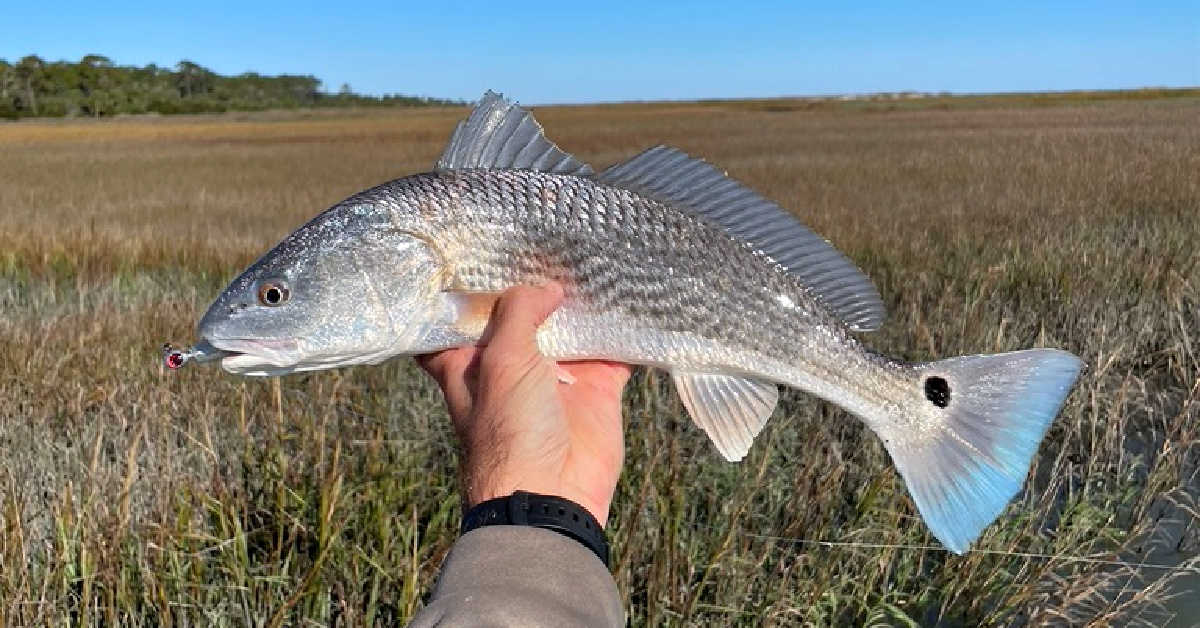
Captain Keith spends these months dialing into redfish, speckled trout, black drum, and flounder in places most summer anglers run right past. These backwater spots only reveal their full potential once the pressure disappears. This isn’t random fishing — it’s intentional, tactical, calm, and incredibly effective.
Winter Species Guide: What You’re Actually Catching
Understanding which species you’re targeting — and why — makes the difference between a fun boat ride and a genuinely productive winter fishing Myrtle Beach trip. Here’s what stacks up in the creeks and marshes once the water cools.
Redfish (Red Drum)
Redfish school heavily in winter, often stacking in tight groups over mud flats and deep holes where water temperatures stay a few degrees warmer. Slow-worked soft plastics and cut bait fished on the bottom near creek bends produce consistent strikes, particularly on falling tides.
Speckled Trout
Speckled trout hold tight to deep structure in winter, especially near creek mouths and dock pilings. A slow retrieve with a suspending jerkbait or a jig under a popping cork mimics the sluggish baitfish trout key in on this time of year.
Black Drum
Black drum feed methodically along the bottom, and winter is prime time for finding them in tighter schools near oyster beds. Fresh shrimp or crab on a Carolina rig is the go-to setup, fished patiently on slack tide.
Flounder
While flounder activity slows compared to fall, deeper channel edges and warm-water drains still hold fish willing to eat a slow-dragged mud minnow or paddle-tail jig, especially on warmer afternoon tides.
Gear, Clothing, and Weather: What to Bring on a Winter Charter
One reason people hesitate on winter fishing is uncertainty about what to actually pack. In reality, preparation is simple once you know what to expect.
- Layered clothing: a moisture-wicking base layer, an insulating mid-layer, and a wind-and-water-resistant outer shell handle Grand Strand winter mornings comfortably.
- Gloves and a neck gaiter: most of the chill comes from wind exposure on open water, not the air temperature itself.
- Non-slip, closed-toe footwear: boat decks can be damp and cooler mornings mean less grip than summer.
- Polarized sunglasses: low winter sun angles create serious glare, and clearer water makes sight-fishing genuinely possible.
Before heading out, it’s always worth checking conditions through the National Weather Service, since wind direction — more than temperature alone — determines how comfortable and productive a winter trip will be. Anglers should also confirm current regulations through the South Carolina Department of Natural Resources, which manages seasonal limits on species like redfish and flounder.
Local Knowledge Changes Everything in Winter
Winter exposes the gap between someone who “knows how to fish” and someone who knows these waters. Tides behave differently in winter, and cold fronts move fish subtly but decisively. A creek that produced yesterday may shut down today, while another turns on like a switch.
Captain Keith has lived through thousands of winter tides and has watched the same patterns repeat over decades. He knows when to push shallow and when to stay deep, when to fish moving water and when slack tide is the real window. This isn’t guesswork — it’s muscle memory built over 40 years.
Growing up fishing Sunset Beach and Ocean Isle Beach gave him an intimate understanding of how fish use the Carolina marsh system year-round. That experience translates directly to the waters around Calabash, Little River, Cherry Grove, and North Myrtle Beach. When you fish with him, you aren’t just hiring a boat — you’re borrowing decades of local knowledge.
Myrtle Beach Winter Fishing vs. Summer: The Honest Comparison
Summer fishing has energy. Winter fishing has efficiency. Consider the two seasons side by side:
- Summer: more boats, more pressure, more randomness, more waiting between bites.
- Winter: fewer anglers, more predictable fish, cleaner water, higher hookup ratios.
Same fish, different season. If your goal is numbers, learning, and quality fishing time — rather than simply being on the water — winter quietly wins. And if you’re curious how the pattern shifts again as temperatures rise, our breakdowns of early spring tactics in March and the May fishing report show exactly how the transition unfolds.
Is Winter Fishing Good for Beginners?
Yes — often better. Winter fish behavior is easier to explain and easier to replicate. New anglers learn structure, tides, and presentations faster when fish are concentrated instead of scattered across miles of open flats.
There’s less distraction, less noise, and more coaching time built into every trip. Consequently, there are far more opportunities to understand why a fish bit, not just that it did. Families, first-timers, and serious anglers alike benefit from calmer winter conditions.
How to Plan a Winter Fishing Trip in Myrtle Beach
Planning ahead takes the guesswork out of a winter charter. Follow these steps to set yourself up for a genuinely productive day on the water.
- Check the tide and wind forecast several days out using a trusted source like the National Weather Service, since falling tides and light north winds typically produce the most consistent winter bites in local creeks.
- Pack layered, wind-resistant clothing and gloves so cold mornings don’t cut a promising trip short, and bring polarized sunglasses to cut glare off clearer winter water.
- Book your charter with a captain who specializes in winter conditions rather than a general summer guide, since cold-season success depends heavily on knowing exact holding areas.
- Confirm your target species and gear setup with your captain in advance so tackle, bait, and technique are matched to whether you’re chasing redfish, trout, black drum, or flounder that week.
- Arrive early and stay flexible on timing because winter bite windows can shift quickly around slack tide, and a captain with local knowledge will adjust the plan in real time.
Frequently Asked Questions About Winter Fishing Myrtle Beach
What is the best month for winter fishing in Myrtle Beach?
December through February typically offers the most consistent winter fishing Myrtle Beach conditions, with January often producing the clearest water and the tightest schools of redfish and black drum as cold fronts push fish into deep holding areas.
What fish can you catch during a Myrtle Beach winter fishing trip?
Redfish, speckled trout, black drum, and flounder remain the primary targets, with redfish and black drum being the most reliable since they school tightly in deeper creek bends during colder months.
Do I need special gear for a winter fishing charter?
No specialized tackle is required beyond what a guide already provides. However, layered clothing, gloves, and polarized sunglasses make a meaningful difference in comfort and casting accuracy on colder mornings.
Is winter fishing in Myrtle Beach good for beginners?
Yes. Concentrated fish and calmer water make winter conditions easier for new anglers to read, which means faster learning and more one-on-one coaching time with the captain during each trip.
How cold does it get during winter fishing trips near Myrtle Beach?
Air temperatures typically range from the high 30s in early morning to the low-to-mid 60s by afternoon, while water temperatures in sheltered creeks often stay several degrees warmer than the open ocean.
Should I book a charter or fish inland during the colder months?
Both options work well depending on the day’s wind forecast; sheltered inshore creeks handle wind better than open water, which is why exploring inland fishing charters near Myrtle Beach is a smart backup plan on blustery days.
A Personal Note from a Local Guide
Captain Keith isn’t selling hype. He’s sharing something locals have known for generations: winter isn’t the offseason — it’s the advantage.
He still gets excited watching clients hook into fish when the marsh is quiet and the air is crisp. He still feels pride showing people a side of Myrtle Beach most never see. And he still believes winter trips create better memories because there is space to breathe, learn, and enjoy the moment. Fishing shouldn’t feel rushed. Winter gives it back its soul.
Summer Crowds or Quiet Winter Creeks?
Would you rather fight crowded summer waters or slip into quiet winter creeks where the fish are stacked and waiting? Most people think they know the answer — until they experience both. For a broader look at how conditions compare across the calendar, our guide to the best fishing near Myrtle Beach and our May fishing report lay out exactly what changes once the water warms back up.
Ready to Fish the Season Everyone Else Misses?
If you want fewer boats, better odds, a calm and professional experience, and a local guide who knows these waters inside and out, then winter is your season. And North Myrtle Beach Fishing Charters is your call.
Fish with Captain Keith Logan. Learn the creeks. Feel the difference. See why winter fishing Myrtle Beach trips have become the best-kept fishing secret on the entire Grand Strand.
Book A Winter Fishing Trip Now
Book Now
Winter dates fill quietly but quickly, because locals already know. Don’t wait for summer crowds to tell you what you missed.
Final Takeaway on Winter Fishing Myrtle Beach
In the end, winter fishing Myrtle Beach isn’t a consolation prize for anglers who missed summer — it’s the smarter play. Cold water concentrates fish, clears the creeks of crowds, and rewards the kind of local knowledge Captain Keith Logan has built over four decades on the water. Whether you’re a beginner looking for a calmer learning environment or a seasoned angler chasing higher hookup ratios, the season everyone else skips is exactly the one worth booking first.