
Deep sea fishing gear is the single biggest factor separating a cooler full of mahi-mahi from a frustrating day of snapped lines and missed strikes. Whether you’re booking your first offshore trip out of Little River Inlet or you’ve chased blackfin tuna for years, the rods, reels, safety equipment, and terminal tackle on board change everything about how your day unfolds. This guide breaks down exactly what deep sea fishing gear we supply at North Myrtle Beach Fishing Charters, what you should pack yourself, and how to choose equipment that actually performs 20 to 60 miles offshore — not just on a store shelf.

Unlike a generic gear roundup, this guide is written from the deck of an actual working charter boat. In addition to covering rods, reels, and lures, we’ll walk through the safety equipment the U.S. Coast Guard expects offshore, the electronics that help captains find fish, and a full packing checklist organized by trip length. By the end, you’ll know precisely what deep sea fishing gear matters most — and why.
Why the Right Deep Sea Fishing Gear Changes Everything Offshore
At North Myrtle Beach Fishing Charters (NMBFC), we outfit every trip with dependable, saltwater-ready equipment sized for anglers of every age and skill level. Our goal is simple: keep your day comfortable, safe, and productive, whether you’re fishing with family, friends, or a corporate group. Above all, we believe gear should work as hard as the crew does.
Deep sea fishing — sometimes called big-game fishing when targeting large pelagic species — puts far more stress on tackle than fishing a pond or pier. Saltwater corrodes cheap metal fast, and fish like king mackerel, tuna, and grouper can strip drag in seconds. Consequently, gear built for freshwater simply doesn’t hold up offshore. For a deeper look at putting this gear to work, see our guide on deep sea fishing techniques for landing big fish.
Core Deep Sea Fishing Rods and Reels We Provide at NMBFC
Conventional vs. Spinning Setups for Offshore Fishing Tackle
We run a mix of conventional and spinning setups, chosen specifically for strength and reliability offshore. Conventional rods paired with heavy-duty reels handle big pelagics and heavy tackle work, while spinning combos offer versatility and are easier for beginners to cast. Every reel we use is corrosion-resistant and tuned to deliver smooth, predictable drag — the resistance a reel applies to line as a fish pulls against it — under real fighting pressure.
For anglers who want to build their own kit before a trip, our breakdown of the best fishing tackle for deep sea trips covers rod actions, reel sizes, and gear ratios in more detail.
How Fishing Line, Leaders, and Terminal Tackle Complete Your Deep Sea Fishing Gear Setup
Line, leaders, and terminal tackle are the small details that make hook-ups and landings consistent rather than lucky. We use monofilament for stretch and shock absorption, braided line for strength and sensitivity, and fluorocarbon leaders — nearly invisible line that fish struggle to see near the bait — to reduce cut-offs from sharp teeth and structure. Good leaders, hooks, swivels, and sinkers present bait the way fish naturally expect to see it.
For anglers who want to fish tournament-legal setups, the International Game Fish Association (IGFA) publishes official line-class standards worth reviewing before you buy.
Essential Safety Gear for Deep Sea Fishing Trips
Safety and comfort go hand in hand on longer offshore trips. Therefore, packing smart keeps you protected from the first cast to the last stop at the dock.
Required Safety Equipment Onboard Every Charter

We require life jackets for every passenger and carry fully stocked first-aid kits and emergency signaling gear onboard. Flares, air horns, and VHF radios are standard for communication and for summoning help when needed. As a result, safety is never an afterthought on our trips — it’s built into the deep sea fishing gear list before we ever leave the marina.
Clothing, Sun Protection, and Comfort Items to Pack
Dress in layers to handle changing conditions offshore. A waterproof jacket and pants cut wind and spray, while non-slip shoes keep you steady on a rolling deck. In particular, sun protection matters more than most anglers expect — wide-brim hats, polarized sunglasses, and reef-safe sunscreen are essential for long hours under open sky.
Before you head out, it’s worth checking the National Weather Service marine forecast so your clothing choices match the day’s actual conditions.
Fish Handling Tools and Storage Equipment for Offshore Anglers
Using the right tools keeps anglers safe and preserves the quality of your catch. We provide the equipment and the know-how to land fish cleanly and store them properly for the trip home.
Gaffs, Nets, and Gloves: Handling Your Catch Safely
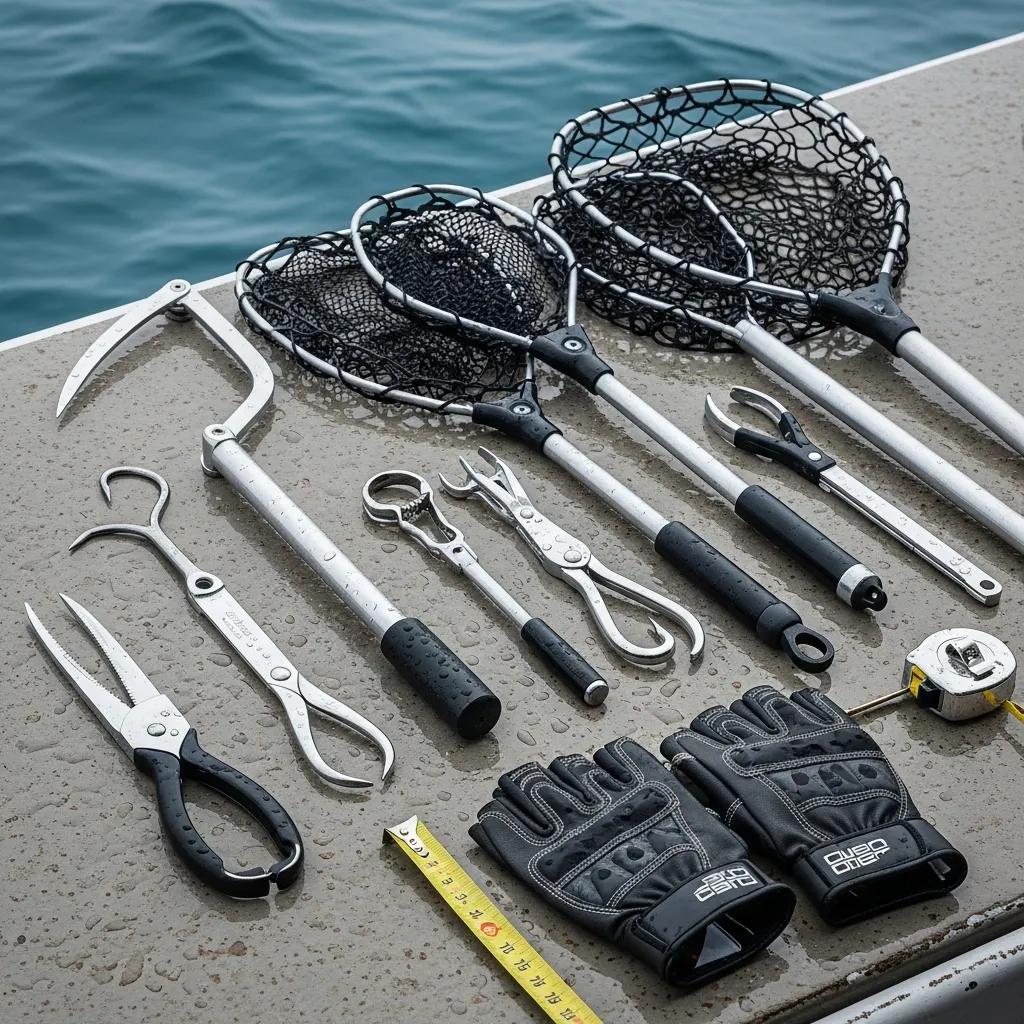
A gaff — a long pole with a sharp hook — helps secure larger fish at the rail without dragging them over the gunwale. Landing nets, in contrast, make for safer, cleaner pickups and are ideal for catch-and-release. Meanwhile, sturdy gloves protect hands from teeth, hooks, and spines. Each tool reduces stress on the fish and keeps everyone safer on deck.
Coolers and Ice Management for Fresh Fish
Keeping fish fresh matters just as much as catching them. We use and recommend insulated coolers with proper icing and drainage to preserve quality until you reach shore. Specifically, layering ice correctly and letting meltwater drain — rather than pool around the fish — makes a noticeable difference in taste and shelf life.
Electronics and Navigation Gear That Improve Your Odds
Fish Finders and Sonar Technology Explained
Fish finders and sonar send sound waves beneath the hull to reveal structure, bait schools, and fish arches in real time. As a result, we can zero in on productive spots faster and fine-tune depth and presentation to match what the fish are actually doing that day, rather than guessing.
GPS, Chartplotters, and VHF Radios for Safety
A chartplotter — essentially a digital map showing your boat’s exact position over underwater terrain — guides us to known hotspots and helps avoid hazards. VHF radios, meanwhile, keep us connected to other boats and the Coast Guard for weather updates or emergencies. Together, these tools are essential for safe, efficient trips offshore.
Best Bait and Lures for Deep Sea Fishing Gear Success
Top Live Baits for Offshore Species
Live bait such as squid, mackerel, and menhaden ranks among the top offshore choices because it mimics natural prey and triggers strikes. In particular, matching live bait to what local fish are actively feeding on increases your chances at the rod significantly.
Artificial Lures: Jigs, Trolling Lures, and More
Artificial lures are engineered to imitate movement and color rather than scent. Jigs excel at vertical presentations across varying depths, while trolling lures cover more water and tempt active predators on the move. Picking the correct size, color, and action for your target species pays off every time.
For more hands-on advice from our crew, browse our collection of expert fishing tips for all experience levels.
How to Choose the Right Deep Sea Fishing Gear: A Step-by-Step Guide
Not sure where to start? Follow this sequence to build a complete, dependable deep sea fishing gear setup without wasting money on the wrong equipment.
- Identify your target species first. King mackerel, grouper, and tuna each require different rod power, reel drag capacity, and line strength, so decide what you’re chasing before buying anything.
- Match your rod and reel to the fishing style. Choose conventional gear for bottom fishing and trolling, or spinning combos for casting live bait and jigs to breaking fish.
- Select line, leader, and terminal tackle for conditions. Pair braided main line with a fluorocarbon leader near structure, and carry a range of hook and sinker sizes for changing depths.
- Add safety and comfort equipment. Pack life jackets, sun protection, and waterproof layers so weather and glare never cut a productive trip short.
- Pack fish-handling tools and storage. Bring gaffs, nets, gloves, and a well-iced cooler so your catch stays safe to handle and fresh until you reach the dock.
- Test and inspect everything before you leave the dock. Check drag settings, line for nicks, and hooks for sharpness so equipment failure never costs you a trophy fish.
Deep Sea Fishing Gear Checklist by Trip Length
Trip length changes what you actually need to bring. Below is a quick-reference checklist so you never overpack or, worse, leave something essential in the truck.
- Half-day trips (4 hours): Sun protection, one water bottle, motion-sickness remedy, and a light jacket.
- Full-day trips (8+ hours): All of the above, plus snacks, a change of clothes, extra sunscreen, and a dry bag for electronics.
- Multi-day or tournament trips: Personal rods if permitted, backup reels, spare line, seasickness prevention, and cold-weather layers for early mornings.
Budget vs. Premium Deep Sea Fishing Gear: What’s Worth the Investment
Not every piece of gear deserves a premium price tag. However, a few categories are worth the extra spend because failure offshore is costlier than failure in a farm pond.
- Worth upgrading: Reels (sealed drag systems resist saltwater intrusion), polarized sunglasses, and VHF radios.
- Fine at budget level: Terminal tackle like hooks and swivels, which get lost or replaced regularly anyway.
- Charter advantage: Booking with NMBFC means you skip this entire budgeting decision — our core deep sea fishing gear is already professional-grade and included.
Common Deep Sea Fishing Gear Mistakes to Avoid
Even experienced anglers make avoidable errors. For example, using freshwater reels offshore leads to rapid corrosion, and skipping a leader near structure often ends in a cut line. Similarly, packing cotton clothing instead of quick-dry layers leaves anglers cold and miserable once spray sets in. Above all, never skip sun protection — dehydration and sunburn end more trips early than any equipment failure does.
Frequently Asked Questions About Deep Sea Fishing Gear
What Should Beginners Know Before Buying Deep Sea Fishing Gear?
Start with the basics: know which species you might encounter, learn how to handle a rod and reel, and follow safety rules on deck. Booking a charter gives you an experienced crew for hands-on help, making the day more fun and educational. Also, review local regulations so you fish responsibly.
How Can I Prepare for Weather Conditions During a Deep Sea Fishing Trip?
Weather at sea can change quickly, so check forecasts before you go, dress in layers, and bring waterproof outerwear. Sunscreen, a hat, and sunglasses are must-haves. If seas look unsafe, we’ll advise on cancellations or rescheduling — your safety always comes first.
What Are the Best Times of Year to Use Deep Sea Fishing Gear Near Myrtle Beach?
Timing depends on species and local patterns, but spring and summer often bring more activity as waters warm and bait moves inshore. For specific targets, consult our ultimate guide to deep sea fishing near Myrtle Beach or ask our crew about seasonal hot spots.
How Do I Choose the Right Charter Service for Deep Sea Fishing?
Look for a charter with strong reviews, well-maintained boats, and an experienced crew. Ask about group sizes, since smaller trips usually mean more time on the rod, and confirm whether they target the species you want. We’re happy to explain our trips and what to expect.
What Should I Do If I Get Seasick While Fishing Offshore?
To reduce seasickness, consider taking medication before boarding, stay hydrated, and focus on the horizon. Fresh air, light snacks, ginger, or acupressure bands can help. Above all, tell the crew if you feel unwell — we’ll assist you through it right away.
Are There Regulations I Should Know Before Deep Sea Fishing?
Yes — offshore fishing has size and bag limits, seasonal rules, and sometimes permit requirements. These regulations, published by NOAA Fisheries, protect fish populations for future seasons. We follow the rules and help guests stay compliant on every trip.
Does North Myrtle Beach Fishing Charters Provide All Necessary Deep Sea Fishing Gear?
Yes — our charters include the core deep sea fishing gear you need: durable rods and reels, lines, leaders, and terminal tackle. We outfit trips so guests can focus on fishing, not gear prep.
How Much Does Quality Deep Sea Fishing Gear Cost?
A complete personal setup, including a conventional rod and reel, line, leaders, and terminal tackle, typically runs from a couple hundred dollars for entry-level equipment to well over a thousand for tournament-grade gear. Booking a charter avoids this cost entirely since the boat’s gear is already included in your trip.
Can I Bring My Own Deep Sea Fishing Gear on a Charter?
Absolutely — many experienced anglers prefer their own rod and reel. Just let the crew know in advance so we can confirm your setup suits the target species and boat regulations for that trip.
What Personal Items Should Guests Bring Despite Provided Gear?
Bring weather-appropriate clothing, snacks and drinks, any personal medications, and sun protection. A camera or phone is great for photos — just secure it against spray. In addition, if you use motion-sickness remedies or have special safety items, bring those along too.
Final Thoughts: Gear Up and Book Your Deep Sea Fishing Charter
Being well-equipped makes offshore and deep sea fishing safer and more enjoyable. From basic safety gear to advanced electronics and the right bait, knowing what’s on board — and what to bring — sets you up for success. Ultimately, the right deep sea fishing gear isn’t about owning the most expensive rod on the rack; it’s about matching equipment to the species, conditions, and trip length you’ve planned.
When you choose North Myrtle Beach Fishing Charters, you get quality deep sea fishing gear and a crew that knows how to put it to work. Book your trip, pack smart, and get ready to fish with confidence.
If you are still looking for the Top Fishing Gear Options for Every Angler in Myrtle Beach, SC, be sure to check out this page too.
Leave a Reply