
Popular fish species in North Myrtle Beach charters range from inshore red drum and flounder to offshore mahi-mahi, wahoo, and king mackerel, depending on the season, tide, and type of trip booked. Anglers planning a Grand Strand vacation often want to know what they can realistically expect to catch before they reserve a boat. In addition, understanding which species live in local waters at different times of year helps guests choose between inshore, nearshore, and offshore trips. This guide breaks down the species local captains target most, organized by trip type and season, so you can plan a private charter that matches your goals.
Quick answer: The most popular fish species in North Myrtle Beach charters include red drum, flounder, and spotted seatrout inshore; Spanish mackerel, king mackerel, and cobia nearshore; and mahi-mahi, wahoo, tuna, snapper, and grouper offshore in the Gulf Stream. Because availability shifts with water temperature and season, a licensed captain adjusts each day’s plan around current conditions rather than chasing a single fish.
What Are the Most Popular Fish Species in North Myrtle Beach Charters?
In short, popular fish species in North Myrtle Beach charters change depending on where a boat fishes and what time of year it is. Inshore creeks near Little River and Cherry Grove hold different species than nearshore wrecks or the far offshore Gulf Stream.
Since 1991, Captain Keith Logan and the licensed captains at North Myrtle Beach Fishing Charters LLC have used more than 40 years of firsthand local knowledge to read tides, water temperature, and bait movement before choosing a route. As a result, every private trip is planned around the specific group aboard rather than following a fixed itinerary.
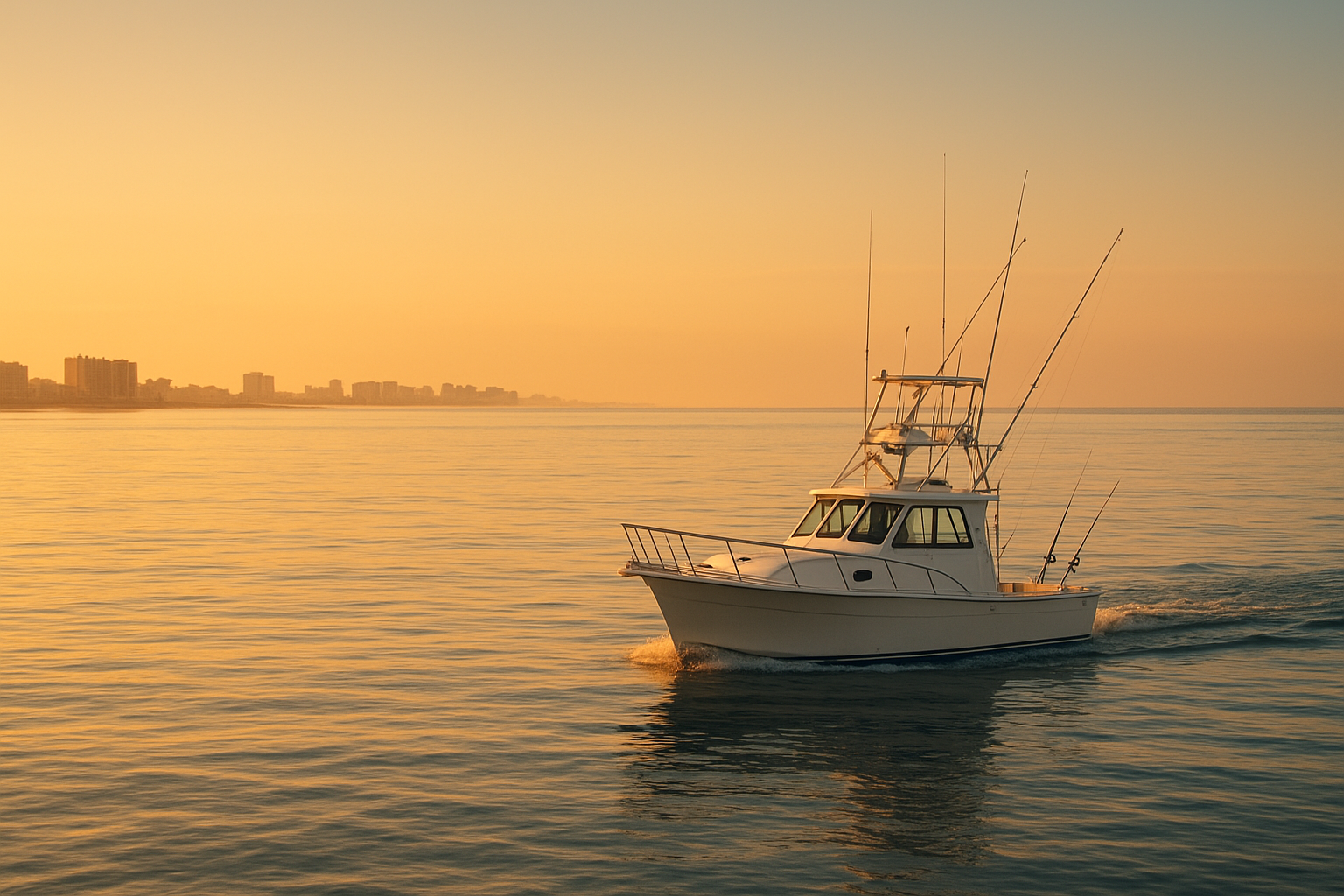
A private charter heading out to fish popular species along the Grand Strand coastline.
Inshore and Backwater Fishing Targets Near the Grand Strand
Inshore and backwater trips explore the calm creeks, marshes, and estuaries that feed the Intracoastal Waterway near Little River, Cherry Grove, and Murrells Inlet. Because these waters stay sheltered from ocean swells, they suit families, beginners, and children learning to fish for the first time.
Red drum, often called redfish, are the signature catch in this environment. Similarly, flounder hold tight to sandy bottoms near docks and oyster beds, while spotted seatrout favor grassy flats during cooler months. Sheepshead, known for their sharp teeth and fondness for fiddler crabs, round out the list of common backwater catches. For a closer look at these species, guests can review this guide to the best fish caught near Myrtle Beach.
Consequently, captains choose backwater locations based on tide stage, since redfish and flounder feed differently on rising versus falling water. A captain who fishes these creeks year-round can read subtle changes in current and bait activity that a visiting angler might otherwise miss.
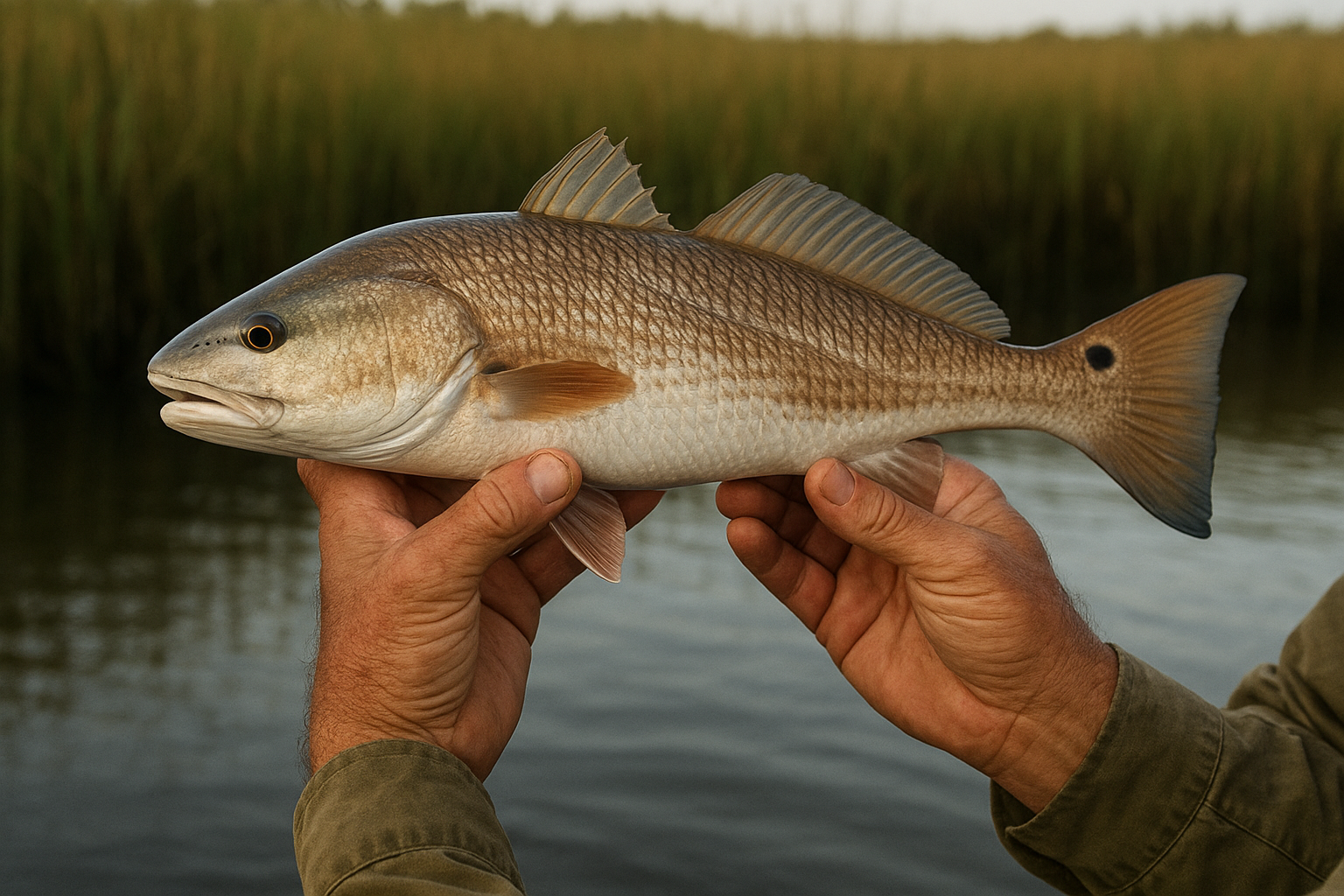
Red drum remain one of the most reliable inshore catches near North Myrtle Beach.
Nearshore Catches Anglers Request Most
Nearshore trips move just outside the inlet, targeting live bottom and bait schools within a few miles of the beach. As a result, these trips often produce faster action and larger fish than backwater outings.
Spanish mackerel and king mackerel are the headline species during warmer months, frequently caught by trolling small spoons or live bait near the surface. In addition, cobia move through nearshore waters during their spring migration, drawing anglers who want a shot at a larger, harder-fighting fish. Sharks, including blacktip and sandbar species, also patrol these waters and are a popular target for guests seeking an adrenaline-focused trip.
Because nearshore conditions change quickly with wind and swell, captains rely on current sea state before finalizing a route. Guests interested in this style of trip can learn more about typical South Carolina nearshore fishing opportunities before booking.
Offshore and Gulf Stream Species Worth the Trip
Offshore, deep sea, and Gulf Stream charters travel much farther, often 20 to 60-plus miles depending on target species and sea conditions. Consequently, these trips typically run longer and require more advance planning around weather windows.
Mahi-mahi, also called dolphinfish, are among the most requested Gulf Stream catches thanks to their bright color and strong runs. Wahoo and various tuna species, including blackfin tuna, are also common in warmer Gulf Stream water. Meanwhile, bottom fishing over offshore wrecks and ledges frequently produces snapper, grouper, and other reef species, though specific catches vary by season and regulation.
For a deeper breakdown of what anglers typically encounter offshore, this guide to deep-sea fishing species covers additional detail on tackle and technique. According to NOAA Fisheries, mahi-mahi grow and migrate quickly, which is one reason their numbers fluctuate season to season along the Atlantic coast.
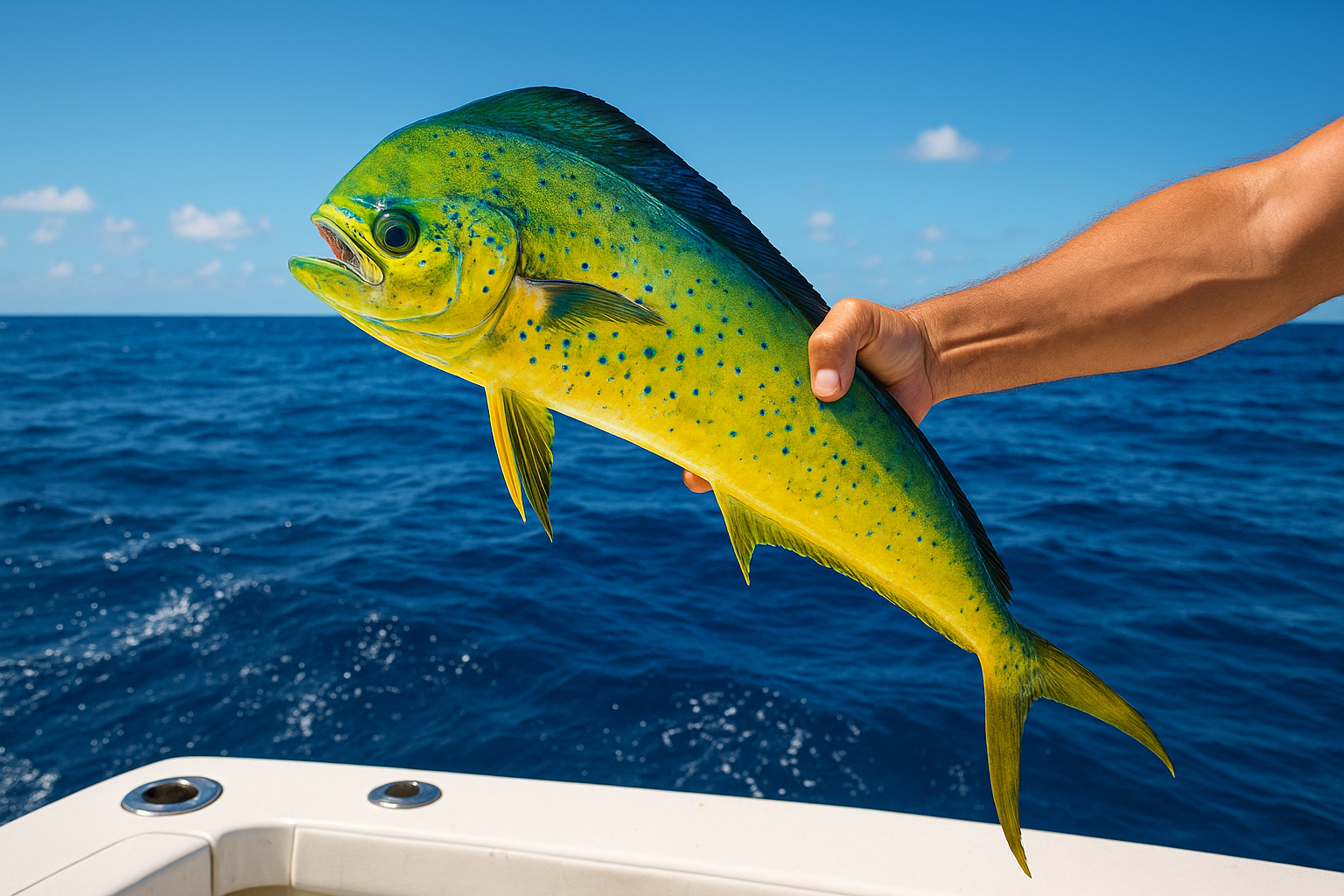
Mahi-mahi are among the most popular fish species in North Myrtle Beach charters that reach the Gulf Stream.
Seasonal Fish Patterns Along the Carolina Coast
Fish behavior shifts throughout the year as water temperature changes. In early spring, for example, spotted seatrout and red drum become more active in the backwaters as water warms past winter lows.
By late spring and into summer, Spanish mackerel, king mackerel, and cobia move closer to shore, while offshore trips begin reaching mahi-mahi and other pelagic species in the Gulf Stream. Similarly, sheepshead activity often peaks around structure during spring and fall transitions. In contrast, winter months tend to favor slower-paced inshore trips, since many nearshore and offshore species move to deeper, warmer water.
Above all, no single month guarantees a specific catch. Fishing opportunities vary with tide, water clarity, bait movement, and short-term weather, so captains plan each trip using current conditions rather than a fixed calendar.
How Captains Choose Which Species to Target
Because so many variables affect where fish are feeding on a given day, local captains follow a consistent process before and during each trip.
- Check tide and weather first. Captains review tide charts, wind direction, and marine forecasts the morning of the trip to decide whether inshore, nearshore, or offshore water will fish best that day.
- Evaluate water temperature and bait movement. Warmer or cooler water shifts where baitfish concentrate, which in turn determines where predator species like red drum or king mackerel are likely feeding.
- Match the target species to the group’s goals. A family with young children may fish calmer backwaters, while experienced anglers seeking mahi-mahi or tuna are guided toward Gulf Stream routes instead.
- Select gear, bait, and location. Rods, reels, and bait are rigged specifically for the chosen species and location before the boat ever leaves the dock.
- Adjust the plan in real time. If conditions change or fish move during the trip, the captain adapts the plan rather than sticking to a single spot the entire outing.
Fishing Regulations and Keeper Limits to Know
South Carolina manages recreational fishing seasons, size limits, and daily bag limits for many popular species, including red drum, flounder, and certain reef fish. Therefore, keeper rules can change from year to year based on stock assessments and conservation needs.
Charter guests do not need to research these rules in advance, since licensed captains stay current on state and federal regulations and hold the required fishing licenses for guests aboard. However, anglers who want to review current limits themselves can check the South Carolina Department of Natural Resources for updated saltwater regulations. Federal offshore species, particularly in the Gulf Stream, may also fall under NOAA management, which is another reason local captain knowledge matters.
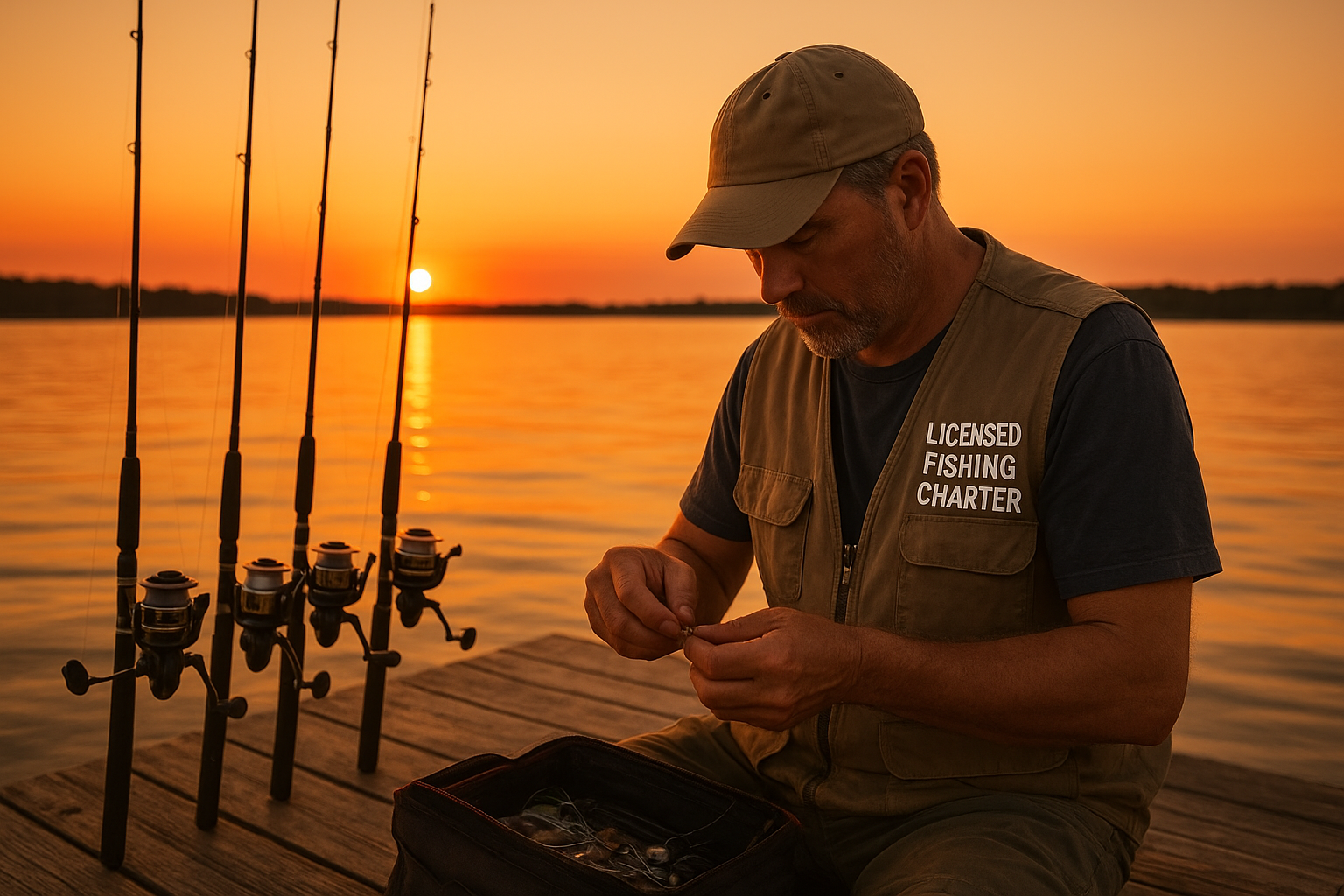
A licensed captain rigs tackle to match the day’s target species before departure.
What Seafood Can You Catch on a North Myrtle Beach Charter?
Guests frequently ask which species are good to keep for the table. Red drum, flounder, mahi-mahi, and several snapper and grouper species are popular table fare when regulations allow harvest.
For a full breakdown of seasonal seafood and which catches are typically kept versus released, see this guide on what seafood you can catch during a charter. Additionally, guests visiting from Calabash, Sunset Beach, or Ocean Isle Beach can review trip options on the North Myrtle Beach, SC area page before booking.
Frequently Asked Questions About Popular Fish Species in North Myrtle Beach Charters
What are the most popular fish species in North Myrtle Beach charters?
Red drum, flounder, spotted seatrout, Spanish mackerel, king mackerel, cobia, mahi-mahi, wahoo, tuna, and various snapper and grouper species are the most requested catches, depending on trip type and season.
What is the best fish to catch inshore near North Myrtle Beach?
Red drum and flounder are generally the most consistent inshore catches, especially in creeks and marshes near the Intracoastal Waterway.
Can beginners catch fish on a North Myrtle Beach charter?
Yes, inshore and backwater trips suit beginners and children well because captains provide instruction, tackle, and calmer water conditions.
When is the best time of year to catch mahi-mahi?
Mahi-mahi are most commonly targeted during warmer months when Gulf Stream water temperatures rise, typically from late spring through summer.
How far offshore do you have to go to catch tuna or wahoo?
Gulf Stream trips targeting tuna and wahoo often travel well beyond nearshore waters, sometimes 40 miles or more depending on conditions and the specific charter.
Do I need a fishing license to fish on a charter?
No, required fishing licenses for charter guests are included as part of the trip.
What is the difference between inshore, nearshore, and offshore fishing?
Inshore fishing takes place in protected creeks and waterways, nearshore fishing occurs a few miles off the beach, and offshore or Gulf Stream fishing travels much farther into deeper water.
Are shark fishing trips available in North Myrtle Beach?
Yes, private shark fishing charters target species such as blacktip and sandbar sharks in nearshore waters.
What fish can you keep to eat from a charter trip?
Red drum, flounder, mahi-mahi, and several snapper and grouper species are commonly kept when size and season regulations allow, though catches are never guaranteed.
How long does a typical fishing charter last?
Trip length varies by type, with inshore trips often running a few hours and offshore or Gulf Stream trips typically lasting a full day.
What is the most common mistake first-time charter guests make?
Booking a trip type that does not match the group’s comfort level is common, such as choosing a long offshore trip for guests prone to seasickness or young children who prefer calmer water.
How much does a North Myrtle Beach fishing charter cost?
Pricing depends on trip length, boat size, and target species, so guests can review current options and request pricing through the online booking system.
Do captains guarantee a specific catch?
No, fishing opportunities depend on tides, weather, and seasonal patterns, so specific species and quantities are never guaranteed.
What should I bring on a fishing charter?
Sunscreen, weather-appropriate clothing, and preferred food or drink are recommended, since rods, reels, bait, and safety gear are provided.
Can large groups book a single fishing charter?
Yes, select boats accommodate up to 15 guests, and multiple boats can be coordinated for larger private parties.
Final Thoughts on Choosing the Right Charter
Ultimately, understanding the popular fish species in North Myrtle Beach charters helps set realistic expectations before you ever leave the dock. Whether your group hopes to reel in redfish in a quiet backwater creek or chase mahi-mahi in the Gulf Stream, matching the trip type to your goals, timeframe, and comfort level makes the biggest difference in your experience. Because conditions shift daily, a licensed local captain who reads tides, weather, and bait movement in real time gives you the best chance at a productive day on the water. To check availability and book a private trip suited to your group, visit North Myrtle Beach Fishing Charters or reach out by phone or text for help choosing the right trip.