
North Myrtle Beach charter fishing for schools gives teachers, youth group leaders, and program coordinators a way to turn a coastal field trip into a hands-on science lesson. Instead of joining a crowded public boat, a class or youth group books a private charter and the licensed captain plans the entire day around the students. As a result, the trip can match the group’s age range, comfort level, and curriculum goals rather than following a one-size-fits-all schedule.
This guide explains how private student charters work along the Grand Strand, what is included, and how to plan a trip that fits a school calendar. In addition, it covers safety, group size, and how to pair fishing with an eco or dolphin tour for an added marine science angle.
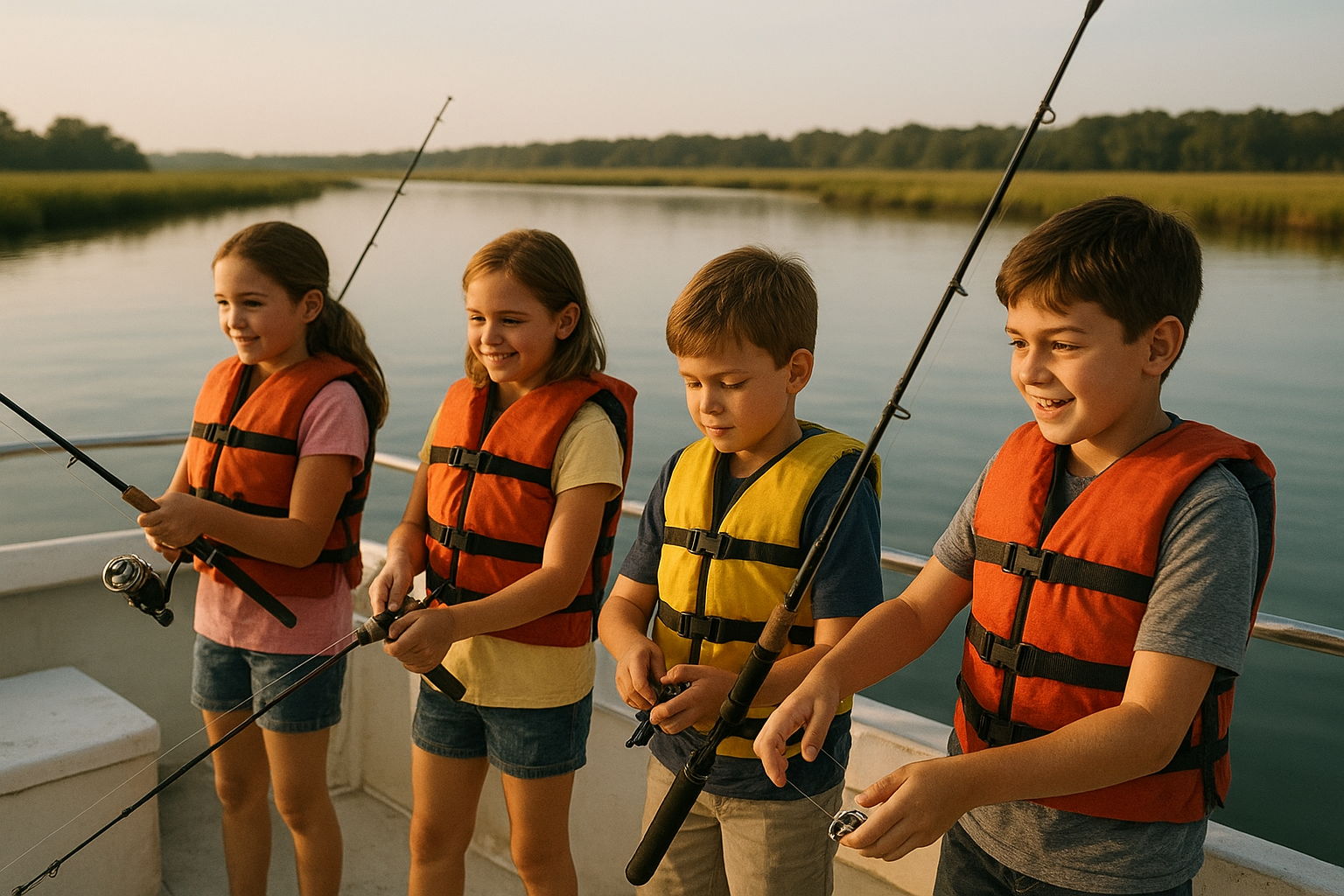
Hands-on instruction is a core part of North Myrtle Beach charter fishing for schools.
What Is North Myrtle Beach Charter Fishing for Schools?
North Myrtle Beach charter fishing for schools is a private, guided fishing trip booked exclusively for a class, homeschool group, or youth organization rather than the general public. A U.S. Coast Guard-licensed captain plans the outing around the group’s age, size, and comfort level instead of mixing students with unrelated passengers.
Because the boat is private, captains can slow down for beginners, explain marine life as it comes aboard, and adjust the trip length to fit a school day. Consequently, the experience works well as a standalone field trip or as part of a broader unit on coastal ecosystems, marine biology, or local history.
Why Schools Choose Private Fishing Field Trips
Many teachers prefer a private school fishing field trip over a public head boat for a simple reason: control. With a private charter, the group is not sharing rail space or rod time with strangers, so every student gets a real chance to participate.
Furthermore, captains who fish these waters year-round can read tides, water temperature, and bait movement to put students near active fish, which keeps engagement high. According to NOAA Fisheries, seasonal fish behavior along the South Atlantic coast shifts with water temperature, which is one reason experienced local captains matter for a smooth trip.
Educational Value of Student Fishing Charters
Student fishing charters naturally introduce topics like tides, food chains, and estuary ecology without feeling like a lecture. For example, a captain explaining why bait fish cluster near a creek mouth is teaching basic marine biology in real time.
In addition, hands-on instruction builds patience, teamwork, and fine motor skills as students bait hooks, cast, and reel in catches with guidance. Programs that reference standards on experiential learning, such as those outlined by experiential education frameworks, often note that outdoor, sensory learning improves retention compared with classroom-only instruction.
Planning a School Fishing Field Trip Step by Step
Booking a group charter is straightforward once the basic details are gathered. The following steps outline how most schools and youth groups plan a trip along the Grand Strand.
- Determine group size and grade level. Count students and chaperones, and note the age range, since this decides whether one boat or several coordinated boats are needed.
- Choose the right trip type. Decide between an inshore or nearshore fishing trip, a shark trip, or a dolphin and wildlife eco tour based on curriculum goals and comfort on the water.
- Contact the charter to check availability. Reach out online, by phone, or by text with preferred dates and group size so multiple boats can be coordinated if the class is large.
- Confirm safety requirements and logistics. Ask about chaperone ratios, required safety gear, and departure points before finalizing the date.
- Complete the booking and prepare students. Finalize the reservation and send families a short packing list covering sun protection, water, and non-marking footwear.
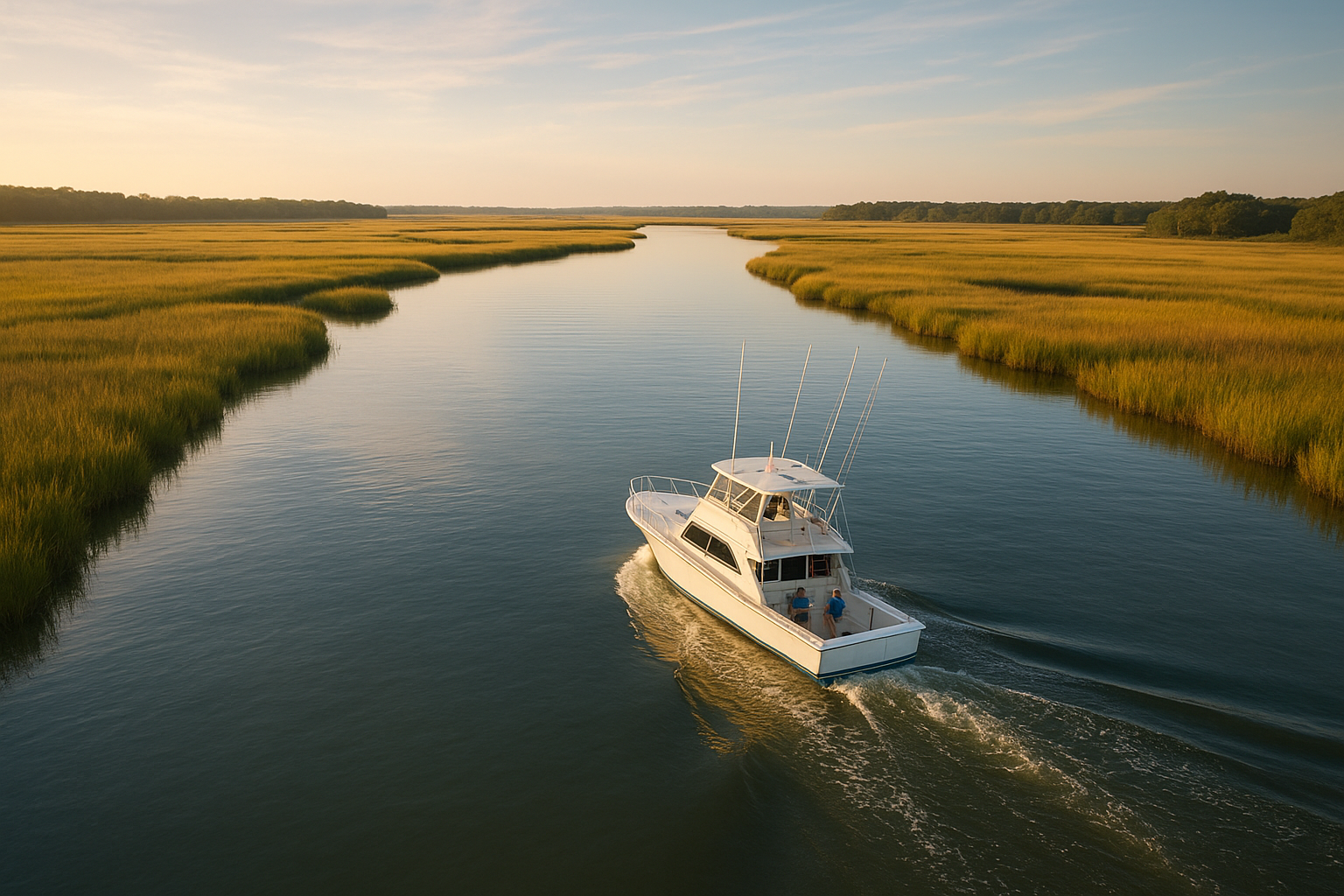
Protected backwater creeks and the Intracoastal Waterway are popular settings for younger student groups.
Matching the Trip Type to Your Class
Younger students generally do best on calm inshore or backwater trips through protected creeks and the Intracoastal Waterway, where boat motion is minimal. Older students, on the other hand, may be ready for a nearshore or shark trip that involves slightly more open water.
Meanwhile, classes focused on marine science sometimes prefer a private dolphin or wildlife eco tour, which trades rods and reels for observation and discussion. Either way, sharing the group’s comfort level and goals with the captain in advance leads to a better match.
Safety and Group Size for Youth Group Fishing Trips
Safety is a top concern for any youth group fishing trip, and private charters are built around it. Every trip is led by a captain licensed through the U.S. Coast Guard, and required onboard safety equipment, including life jackets sized for children, is provided on each vessel.
Group size depends on the boat. Inshore boats typically hold up to six guests, while select larger vessels accommodate as many as fifteen. Therefore, larger classes usually need two or more boats departing together, which the charter operator can coordinate directly. Captains also track conditions in line with guidance from the South Carolina Department of Natural Resources to keep trips aligned with local regulations and seasonal fish patterns.
What to Expect on a North Myrtle Beach Charter Fishing Trip for Schools
On trip day, students typically meet the captain at the dock for a short safety briefing before boarding. Specifically, the captain covers life jacket use, boat movement, and basic rules for handling rods and hooks.
Once underway, instruction is hands-on: students learn to bait hooks, cast, and reel with direct guidance rather than watching from a distance. Since fishing opportunities vary with tides and weather, exact species and catch numbers are never guaranteed, but the emphasis stays on participation and learning rather than a fixed outcome. For groups combining fishing with instruction, this kid-friendly charter guide outlines how instruction is adjusted for younger anglers.
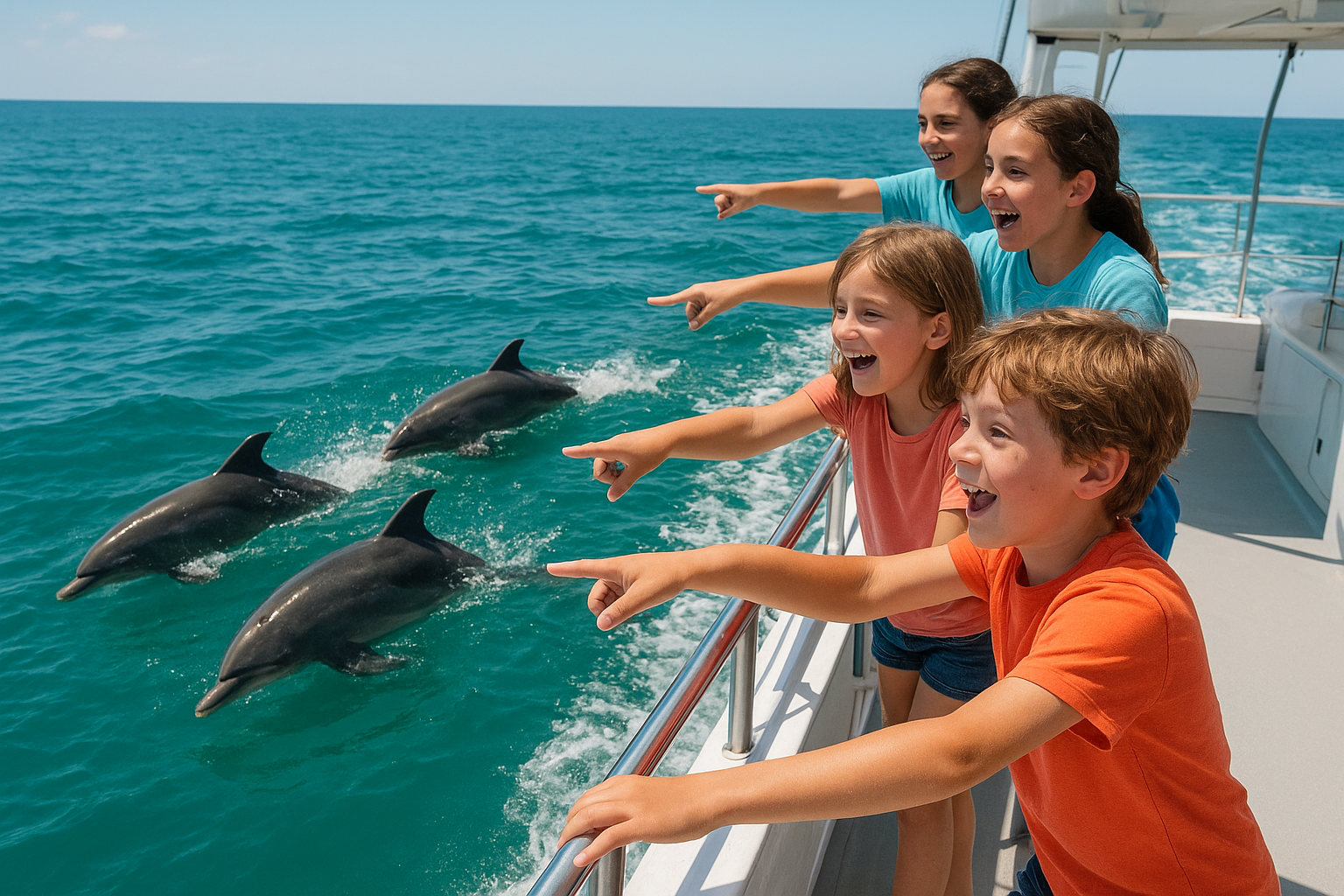
Some schools pair a fishing trip with a private dolphin and wildlife eco tour for a broader marine science lesson.
Choosing a Charter for Families, Groups, and Corporate Outings
While this guide focuses on school groups, the same private-charter model works well for families, vacation groups, and corporate outings visiting North Myrtle Beach, Myrtle Beach, Little River, Cherry Grove, Murrells Inlet, Calabash, Sunset Beach, and Ocean Isle Beach. In fact, many operators that welcome school groups also handle large group charters and multi-boat bookings for bigger parties.
For instance, families wanting a similar kid-friendly experience outside of a school setting can review options built for family fishing charters in Myrtle Beach or browse general family-friendly fishing trips along the South Carolina coast. You can also review full trip details directly on the North Myrtle Beach Fishing Charters website before contacting a program coordinator.
Frequently Asked Questions About North Myrtle Beach Charter Fishing for Schools
What is North Myrtle Beach charter fishing for schools?
North Myrtle Beach charter fishing for schools is a private, guided fishing trip designed for student groups, classrooms, or youth organizations rather than the general public. Licensed captains tailor the trip to the group’s age range, size, and educational goals.
How do school groups book a private fishing charter in North Myrtle Beach?
Schools can book online through the charter’s reservation system or contact the operator directly by phone or text to coordinate dates, group size, and boat availability. Booking in advance is recommended since school trips often need specific dates and multiple boats.
What age students are appropriate for a school fishing charter?
Private school charters can be arranged for elementary, middle, and high school groups since the trip is planned around the captain and not shared with strangers. Captains adjust pacing, safety talks, and hands-on instruction based on the students’ age and experience.
How much does a school fishing charter cost in North Myrtle Beach?
Pricing depends on the boat, trip length, and number of students, since larger groups may require multiple boats working together. Contacting the charter directly with your group size and preferred dates provides the most accurate quote.
How long does a typical school fishing field trip last?
Most inshore and nearshore school trips run between three and five hours, which fits comfortably within a standard school day. Longer offshore or Gulf Stream trips are available but are typically better suited to older students with more time available.
What is included in a North Myrtle Beach charter fishing for schools trip?
A school charter typically includes the licensed captain, rods, reels, bait, tackle, hands-on instruction, required fishing licenses, and onboard safety equipment. Students generally only need to bring sun protection, water, and appropriate footwear.
How many students can join one charter boat?
Inshore boats generally hold up to six guests, while select larger vessels can carry as many as fifteen guests, depending on the boat and trip type. For larger classes, multiple boats can be coordinated to depart at the same time.
What safety measures are in place for student fishing trips?
Every trip is led by a U.S. Coast Guard-licensed captain and includes required onboard safety gear such as life jackets. Captains also brief students on boat safety and monitor tides and weather conditions before and during the trip.
What is the difference between a school fishing charter and a public head boat trip?
A private school charter is booked exclusively for one group, so the captain plans the entire trip around the students rather than mixing them with unrelated passengers. Head boats, in contrast, sell individual seats to the general public on a fixed schedule.
Can schools combine a fishing trip with a dolphin or eco tour?
Yes, many programs pair a fishing charter with a private dolphin or wildlife eco tour to add a marine science component to the field trip. This combination works well for classes studying coastal ecosystems or marine biology.
What is the best time of year for a school fishing charter near North Myrtle Beach?
Spring and fall generally offer milder weather and steady fish activity, making them popular for school groups planning outdoor trips. However, captains monitor seasonal patterns year-round, so trips can often be scheduled outside peak months as well.
Do chaperones need to pay or have a fishing license?
Required fishing licenses for the charter are provided as part of the trip, so chaperones do not need to obtain one separately. Charter operators can clarify chaperone-to-student ratios and any additional costs during booking.
What common mistakes should schools avoid when planning a fishing field trip?
The most common mistake is waiting too long to book, since school groups often need multiple boats or specific weekday time slots. Another mistake is not confirming group size and age range ahead of time, which helps the captain plan the right trip.
What should students bring on a North Myrtle Beach charter fishing trip?
Students should bring sunscreen, a hat, sunglasses, water, and closed-toe shoes with non-marking soles. Since fishing gear, bait, and safety equipment are provided, students typically do not need to bring their own equipment.
Final Thoughts on Booking a School Fishing Charter
In summary, North Myrtle Beach charter fishing for schools turns a routine field trip into a hands-on lesson in marine science, patience, and teamwork, all under the guidance of a licensed captain. Because every trip is private, the pace, trip type, and instruction can be matched to the group rather than forced into a generic public schedule.
Ultimately, the best results come from planning early: confirm group size, choose the right trip type, and communicate directly with the charter about safety and logistics. With that groundwork in place, a school or youth group can book a North Myrtle Beach charter fishing trip that fits both the curriculum and the calendar.