
The Myrtle Beach tigers most visitors are searching for live at T.I.G.E.R.S. Preservation Station, a wildlife education center tucked inside the Barefoot Landing entertainment complex in North Myrtle Beach, South Carolina. Home to rescued tigers, lions, and other exotic cats, this attraction draws families and animal lovers from across the Grand Strand every season. Below, you will find everything the competition leaves out — individual animal profiles, the real history behind the preserve, ticket and pricing guidance, safety rules, accessibility details, and a clear explanation of how this Barefoot Landing attraction differs from the separate Myrtle Beach Safari tour. We will also show you how to pair your visit with other North Myrtle Beach adventures, including private fishing charters and eco tours.
Quick Answer: The Myrtle Beach tigers at Barefoot Landing live at T.I.G.E.R.S. Preservation Station, an exotic animal rescue and education attraction next to the shops and waterfront at Barefoot Landing in North Myrtle Beach. Guests can view tigers, lions, ligers, and other rescued big cats up close, watch educational presentations, and, at times, book photo experiences. This is a different stop from the separate Myrtle Beach Safari tour, which we explain in detail below.
What Is Myrtle Beach Tigers Barefoot Landing?
Myrtle Beach Tigers Barefoot Landing describes both the search term travelers use and the actual attraction they find: T.I.G.E.R.S. Preservation Station. In particular, this facility is a nonprofit conservation, education, and entertainment center specializing in exotic big cats. Consequently, it functions less like a traditional zoo and more like a hands-on wildlife classroom, where trained handlers introduce guests to animals that most people never see outside of a nature documentary.
As a result, visitors leave with a stronger understanding of tiger conservation, breeding programs, and the challenges these animals face in the wild. Above all, the experience is designed to feel personal rather than crowded, since group sizes are managed carefully throughout the day. Unlike a roadside zoo, every presentation here ties back to a specific conservation lesson, whether that’s genetics, diet, or habitat loss.
Myrtle Beach Tigers Barefoot Landing vs. Myrtle Beach Safari: Know the Difference
Here is a distinction that trips up a lot of travelers: T.I.G.E.R.S. Preservation Station at Barefoot Landing is not the same experience as the Myrtle Beach Safari tour. Specifically, Myrtle Beach Safari is a separate, reservation-only, multi-hour private tour located off-site, away from the Barefoot Landing shopping and dining district, while the Barefoot Landing location offers shorter walk-up visits built around scheduled presentations.
In contrast, if your plan is to stroll the Barefoot Landing boardwalk, grab lunch, browse the shops, and still fit in a tiger encounter without a half-day commitment, the Preservation Station is the better fit. Therefore, knowing which attraction you actually want before you book saves confusion — and in some cases, a wasted drive to the wrong location.
Meet the Myrtle Beach Tigers: Animal Profiles and Species You’ll See
Visitors often want to know exactly which animals they’ll meet, not just a generic description. Generally speaking, the lineup includes several categories of big cats, each with its own story and conservation significance.
Tigers
Bengal and white tiger cubs and adults rotate through the exhibit depending on breeding schedules and age. Each tiger is classified as an endangered species, and handlers explain the genetics behind coat coloration, including why white tigers are a rare recessive trait rather than a distinct subspecies.
Ligers and Hybrid Big Cats
Ligers, a hybrid of a male lion and a female tiger, are among the largest cats in the world and have appeared at this preserve over the years. As a result, guests often use the visit to ask handlers detailed questions about hybrid genetics that they can’t find answered anywhere else.
Lions and Other Exotic Rescues
Beyond tigers, African lions and other rescued exotic cats round out the exhibit lineup. Because animals are periodically rotated between preservation locations for breeding and medical reasons, the exact roster can shift from one visit to the next — which is one more reason to check the current schedule before you go.
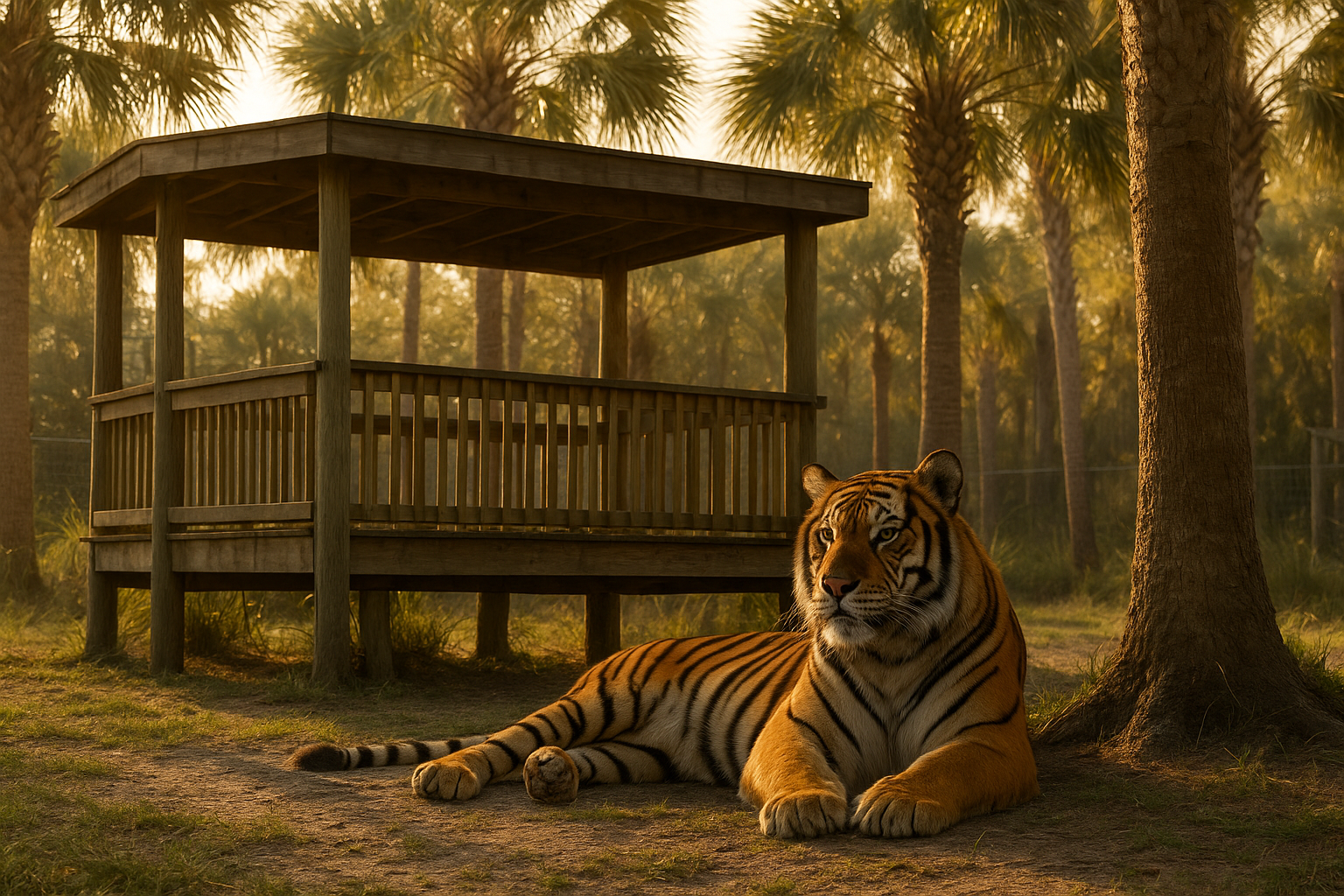
The Myrtle Beach tigers at Barefoot Landing rest between educational presentations throughout the day.
The History Behind T.I.G.E.R.S. Preservation Station
T.I.G.E.R.S. Preservation Station traces its roots to a broader wildlife preservation organization founded to protect endangered big cats through breeding, rescue, and public education. Specifically, the organization operates under strict federal oversight, since any facility housing tigers or other regulated exotic animals must maintain licensing through the U.S. Department of Agriculture’s Animal and Plant Health Inspection Service, which enforces animal welfare standards nationwide.
Tigers themselves are classified as endangered, with fewer than 4,500 remaining in the wild worldwide, according to the World Wildlife Fund and Wikipedia’s tiger population data. Therefore, facilities like this one play a meaningful role in public awareness, even though captive breeding alone cannot replace habitat protection in the wild.
Similarly, the broader organization behind the exhibit has been involved in big cat conservation work for decades, including public education campaigns about poaching, habitat loss, and the illegal wildlife trade — all issues that directly threaten wild tiger populations across Asia.
What to Expect When You Visit the Barefoot Landing Tiger Exhibit
Upon arrival, guests typically walk through a series of outdoor habitats where handlers narrate short educational talks about each animal’s background. In addition, scheduled presentations often include feeding demonstrations, behavioral training displays, and question-and-answer segments. Meanwhile, staff explain conservation status, diet, and natural behaviors in plain, accessible language rather than technical jargon.
For guests who upgrade to a photo experience, supervised close encounters may be available with younger animals, always under strict handler control. Similarly, families with children often appreciate that the pacing is relaxed, since there is no pressure to rush between stops. You can find current details on our T.I.G.E.R.S. Preservation Station page before you go.
Best Time to Visit the Myrtle Beach Tiger Attraction
Generally speaking, spring and fall bring milder temperatures and thinner crowds, which makes for a more comfortable walk-through experience. In contrast, summer months attract the largest number of vacationing families, so arriving early in the day helps avoid long waits at popular exhibit stops.
Furthermore, weekday mornings tend to be quieter than weekend afternoons. As a result, if flexibility allows, planning a weekday visit often means shorter lines and more one-on-one time with handlers during presentations.
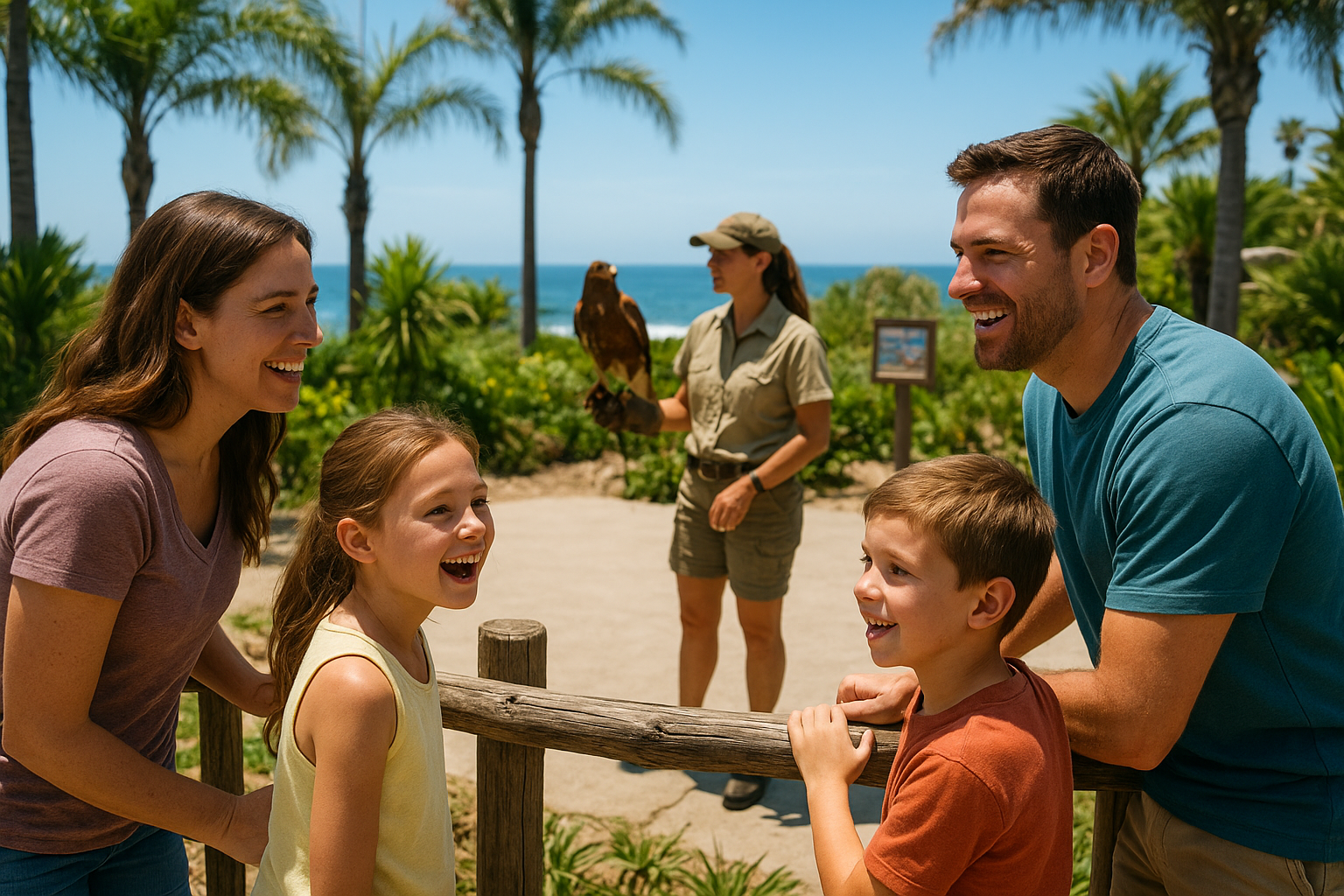
Families often plan a full day around the Barefoot Landing tiger exhibit and shopping district.
How to Plan Your Visit Step by Step
Because schedules and packages can shift seasonally, a bit of planning goes a long way toward a smooth day. The following steps outline a practical approach.
- Check the daily schedule online or by phone before you arrive, since show times and photo session availability shift with the season and staffing levels.
- Choose between a general exhibit visit or an upgraded photo experience, since pricing and access levels differ noticeably between these two options.
- Arrive at least thirty minutes early to find parking and walk through the Barefoot Landing complex without feeling rushed before your time slot.
- Follow every instruction from trained handlers during presentations or close encounters, since their guidance keeps both guests and animals safe throughout the visit.
- Extend the day by exploring Barefoot Landing’s shops and waterfront, then consider booking a private fishing charter or eco tour to round things out.
Ticket Options, Pricing Tiers and Photo Experiences
Admission generally falls into two tiers: a standard walk-through pass that covers the exhibit path and scheduled presentations, and an upgraded photo-experience package that adds supervised close encounter time. Specifically, photo packages tend to cost more because they require a dedicated handler and a smaller group size per session.
Group rates and seasonal promotions are also common, particularly during the shoulder seasons of spring and fall. Therefore, it is worth calling ahead or checking online before your trip, since prices and package inclusions can change between the slower off-season and the busy summer stretch.
Visitor Safety, Etiquette and Accessibility
Above all, every interaction at the preserve is supervised by trained handlers who set clear boundaries before any presentation begins. For example, guests are told exactly where to stand, how to behave around the enclosures, and what is and isn’t permitted during a photo session.
In terms of accessibility, the walkway through Barefoot Landing is largely flat and paved, which generally accommodates strollers and wheelchairs without much difficulty. Nevertheless, because much of the path is outdoors and uncovered, visitors with mobility needs or heat sensitivity should plan for shade breaks and bring water, especially during summer afternoons.
Other Things to Do Near Barefoot Landing
Beyond the tiger exhibit, Barefoot Landing itself offers waterfront dining, live entertainment, and specialty shops along a scenic boardwalk overlooking the Intracoastal Waterway. You can browse an overview of the whole complex on our Barefoot Landing guide for additional context before your trip.
Nearby, Lost Treasure Golf provides a family-friendly mini golf course themed around shipwrecks and pirate legends, making it a natural pairing for an afternoon after visiting the tigers. Likewise, families looking to extend their wildlife theme often add a private dolphin and eco tour to see marine life along the coast the same day, or browse our full North Myrtle Beach eco tours page for more options.
What Is the Best Way to See Both Wildlife and Marine Life in North Myrtle Beach?
The most efficient way to see both land and marine wildlife is to pair a morning visit to the tiger exhibit with an afternoon boat trip. Specifically, private eco tours and fishing charters run on flexible schedules, so they fit easily around attraction hours at Barefoot Landing.
Consequently, many visiting families build a single day that includes a wildlife education stop, lunch along the waterfront, and a private boat excursion. This approach maximizes limited vacation time without feeling rushed at any single stop. If you’d like a preview of what else swims and flies along this coast, our guide to best coastal wildlife sightings around Myrtle Beach is a useful next stop.
Pairing Your Myrtle Beach Tigers Visit with a Fishing Charter
Once you have explored the Myrtle Beach tigers at Barefoot Landing, many families choose to spend the rest of the day on the water. Notably, private charters allow every trip to be planned around the group’s comfort level and fishing goals, rather than following a fixed, shared schedule like a typical head boat.
For example, our deep-sea fishing charters take guests offshore toward wrecks and deeper structure, while inshore and nearshore trips stay closer to the protected creeks near North Myrtle Beach. Since 1991, our licensed captains — including Captain TJ — have used local tide patterns, water temperature, and seasonal fish movement to plan each outing around the people aboard. For a preview of what you might spot along the way, see our rundown of wildlife you can expect to see on a fishing charter. You can review current charter options directly at northmyrtlebeachfishingcharters.com to see what fits your group and schedule.
Why Locals Recommend Combining Both Experiences
In addition to the educational value of the tiger exhibit, spending time on the water introduces guests to a completely different side of the Grand Strand’s Myrtle Beach coastline. Above all, seeing dolphins, seabirds, and game fish in their natural habitat complements what visitors learn on land at Barefoot Landing.
Conservation Impact: How Visiting Supports Endangered Tigers
The organization behind the Myrtle Beach tigers exhibit focuses on breeding, rescue, and public education for endangered big cats. Consequently, admission and photo-experience proceeds help fund conservation efforts for species facing habitat loss, poaching, and the illegal wildlife trade in the wild.
In particular, public education is the piece most visitors underestimate. By seeing a tiger up close and hearing a handler explain exactly why fewer than 4,500 remain in the wild, guests often come away far more invested in conservation than a documentary alone could achieve.
Frequently Asked Questions About Myrtle Beach Tigers Barefoot Landing
What is Myrtle Beach Tigers Barefoot Landing?
Myrtle Beach Tigers Barefoot Landing refers to T.I.G.E.R.S. Preservation Station, a wildlife education attraction inside the Barefoot Landing complex in North Myrtle Beach. It houses rescued tigers, lions, and other exotic animals for educational shows and photo experiences.
Where is T.I.G.E.R.S. Preservation Station located?
T.I.G.E.R.S. Preservation Station sits within the Barefoot Landing shopping and entertainment complex along U.S. Highway 17 in North Myrtle Beach. It is easy to reach on foot from most Barefoot Landing shops and restaurants.
How much does it cost to visit the tiger exhibit?
Admission prices vary by season and by which exhibit package or photo experience you choose. Checking the official schedule ahead of time helps avoid surprises, since pricing can change during peak summer months.
Is the tiger attraction safe for children?
Yes, the exhibit is designed with families in mind, and trained handlers supervise every interaction. Staff set clear rules before any photo session or close encounter to keep both guests and animals safe.
Can visitors touch the tigers at Barefoot Landing?
Some experience packages allow supervised photo opportunities with young cats, but full-grown tigers are viewed rather than handled. Handlers determine which interactions are appropriate based on the animal’s age and temperament that day.
How long does a typical visit take?
Most guests spend 30 to 60 minutes touring the exhibit and watching presentations. Adding time to explore Barefoot Landing’s shops and waterfront afterward can turn it into a half-day outing.
What is the best time of year to see the Myrtle Beach tigers?
Spring and fall offer milder weather and smaller crowds, making them ideal for a relaxed visit. Summer draws more vacationing families, so arriving earlier in the day helps you avoid long waits.
Are reservations required for T.I.G.E.R.S. Preservation Station?
Reservations are recommended, especially for photo experiences or during peak tourist season. Walk-ins are often accepted, but booking ahead guarantees your preferred time slot.
What other animals live at the preservation station?
Beyond tigers, the facility has been home to lions, ligers, and other exotic rescues over the years. Exhibit lineups change periodically as animals are rotated between preservation locations.
How does this attraction support wildlife conservation?
The organization behind the exhibit focuses on breeding, rescue, and public education for endangered big cats. Proceeds and educational programming help fund conservation efforts for species facing habitat loss in the wild.
What mistakes should first-time visitors avoid?
A common mistake is arriving without checking the day’s schedule, since shows and photo sessions run at set times. Another is skipping sun protection, as much of the outdoor walkway has limited shade.
Can I combine a tiger visit with a fishing charter or eco tour?
Yes, many visitors pair a morning wildlife visit with an afternoon private fishing charter or dolphin eco tour along the North Myrtle Beach coastline. This combination makes for a full day of land and water adventure.
Is Barefoot Landing itself free to visit?
Walking through Barefoot Landing’s shops, boardwalk, and waterfront is free of charge. Only specific attractions inside the complex, such as the tiger exhibit or mini golf, require separate admission.
What should I bring to the Myrtle Beach tigers exhibit?
Comfortable walking shoes, sun protection, and a camera are the essentials for most visitors. Bringing water is also wise since much of the walking path is outdoors.
What is the difference between T.I.G.E.R.S. Preservation Station and Myrtle Beach Safari?
T.I.G.E.R.S. Preservation Station at Barefoot Landing offers shorter walk-up visits built around scheduled shows, while Myrtle Beach Safari is a separate, reservation-only, multi-hour private tour at a different location. Choose based on how much time you want to spend.
Is photography allowed without purchasing a photo package?
Yes, general admission guests can typically photograph the exhibits and presentations from a normal viewing distance. A paid photo package is only required for supervised close-contact photos with the animals.
In summary, Myrtle Beach Tigers Barefoot Landing points visitors toward T.I.G.E.R.S. Preservation Station, a hands-on wildlife education stop right inside the Barefoot Landing complex in North Myrtle Beach — not to be confused with the separate Myrtle Beach Safari tour. Whether you plan a quick walk-through or an upgraded photo experience, checking the schedule ahead of time and arriving early makes for the smoothest visit. Finally, pairing your day with a stop at Lost Treasure Golf, an eco tour, or a private fishing charter helps turn a single attraction into a full North Myrtle Beach adventure worth remembering.