
Myrtle Beach redfish trout topwater fishing turns a quiet morning on the water into an explosive visual event the moment a red drum or speckled trout blows up on a surface lure. Along the creeks, grass flats, and oyster bars around North Myrtle Beach, this style of fishing peaks whenever bait moves shallow and water temperatures sit in that comfortable middle range. Because every strike happens right on the surface, topwater fishing is one of the most exciting ways to target these two popular inshore species. In addition, it rewards anglers who understand timing, lure choice, and a proper retrieve. This guide breaks down the lures, tides, technique, and local spots that make topwater fishing near North Myrtle Beach so productive throughout the season.
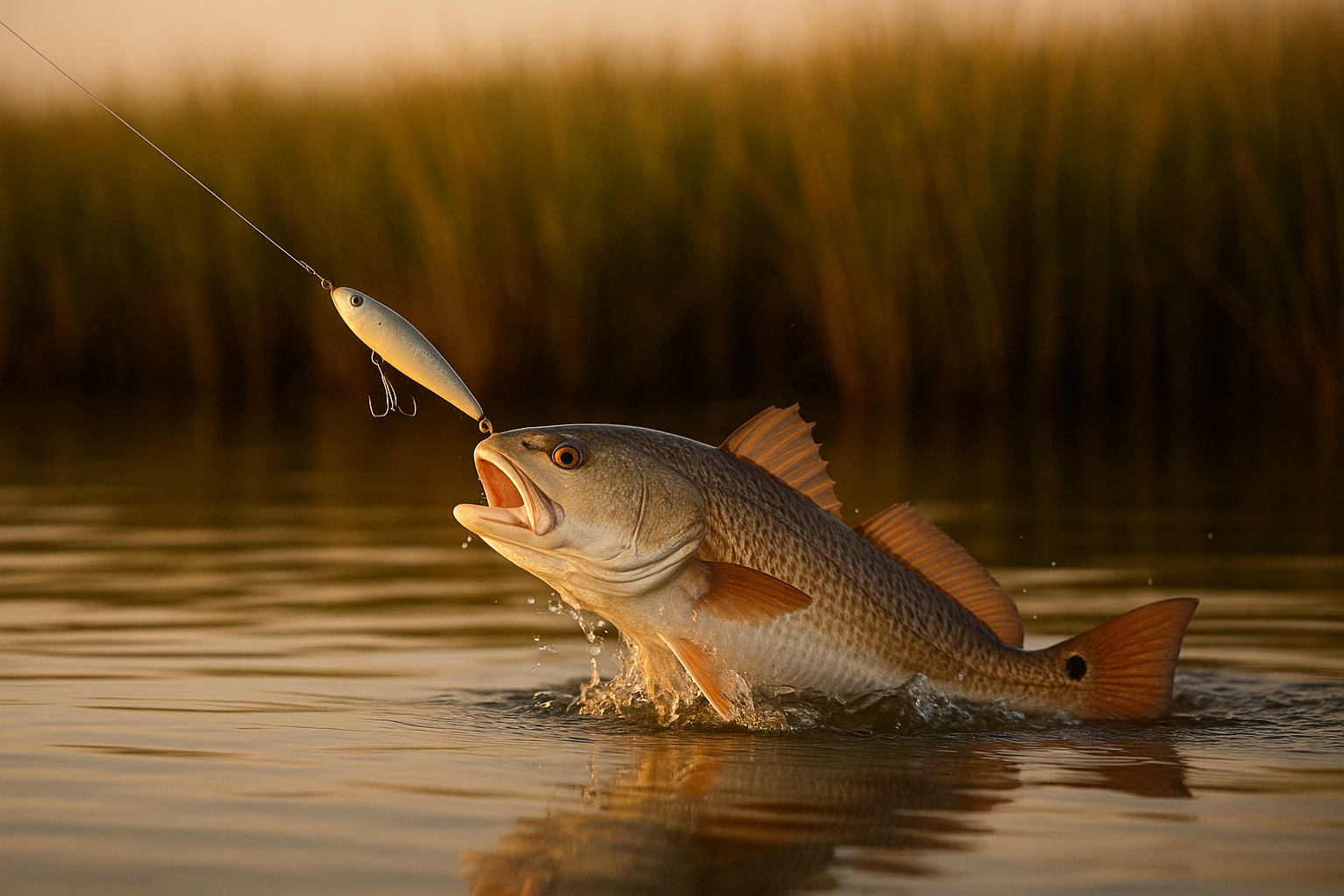
A redfish breaks the surface during a Myrtle Beach redfish trout topwater fishing trip at first light.
What Is Myrtle Beach Redfish Trout Topwater Fishing?
Myrtle Beach redfish trout topwater fishing is the practice of casting floating lures across shallow inshore water so redfish and speckled trout strike them on the surface. Anglers typically fish grass flats, creek mouths, and oyster bars during moving tides, since baitfish get pushed into these areas and draw predators up to feed.
Unlike bottom fishing, this technique lets anglers see every take. As a result, it builds excitement quickly, even for guests who have never fished saltwater before. Captains who fish these waters daily can read subtle clues, such as surface nervousness or diving birds, that signal active fish nearby. Consequently, timing a cast to that activity dramatically improves the odds of a strike.
Best Topwater Lures for Redfish and Speckled Trout
Most local captains rely on a small handful of proven lure styles rather than a large tackle box. Specifically, walk-the-dog style plugs that create a side-to-side wobble tend to draw strikes from both species. In addition, popper-style lures that pop and spit water work well when the surface has a bit of chop.
Color selection matters, too. Natural baitfish patterns usually perform best in clear water, while brighter chartreuse or white lures stand out better in stained or murky conditions. For example, many guides switch to a brighter lure right after a rain event, since runoff often clouds backwater creeks. According to the Red drum species profile, redfish rely heavily on sight and vibration to locate prey, which helps explain why lure movement often matters more than exact color.
How to Work a Topwater Lure: Step-by-Step Technique
Learning the retrieve takes a little practice, but the sequence below gives new anglers a reliable starting point on the water.
- Cast past the target. Place the lure several feet beyond the grass edge or bait activity so the splash does not spook nearby fish.
- Let the lure settle. Pause until the surface rings disappear, since strikes often happen right after the lure goes still.
- Start a walking cadence. Use short wrist snaps while reeling slack to create a steady side-to-side walking motion.
- Wait through the strike. Pause briefly after a blow-up instead of setting the hook immediately.
- Reel into tension and set the hook. Once the line comes tight, lift the rod smoothly and begin fighting the fish.
For a deeper breakdown of retrieve speed and rod angle, the topwater fishing guide for Myrtle Beach covers additional variations captains use throughout the season.
Best Season and Tides for Myrtle Beach Topwater Fishing
Topwater action generally builds through late spring and peaks during the fall as water temperatures cool into the 70s. During this stretch, bait schools push into shallow creeks, and both redfish and trout follow closely behind. As a result, September and October are consistently two of the strongest months for surface strikes along the Grand Strand.
Tide stage matters just as much as the calendar. Moving water, whether incoming or outgoing, pushes bait through creek mouths and over oyster bars, which triggers feeding activity. In contrast, slack tide periods around dead high or dead low tend to slow the bite considerably. A recent Myrtle Beach inshore fishing report noted that even cooler winter months can still produce surface strikes on warmer afternoons when tide timing lines up well.
Water clarity also plays a role. Specifically, a slight stain with good tide movement often outperforms gin-clear, slack water, since fish feel more comfortable feeding aggressively near the surface. Because conditions shift daily, local captains check tide charts, wind direction, and recent rainfall before choosing a starting point each morning.
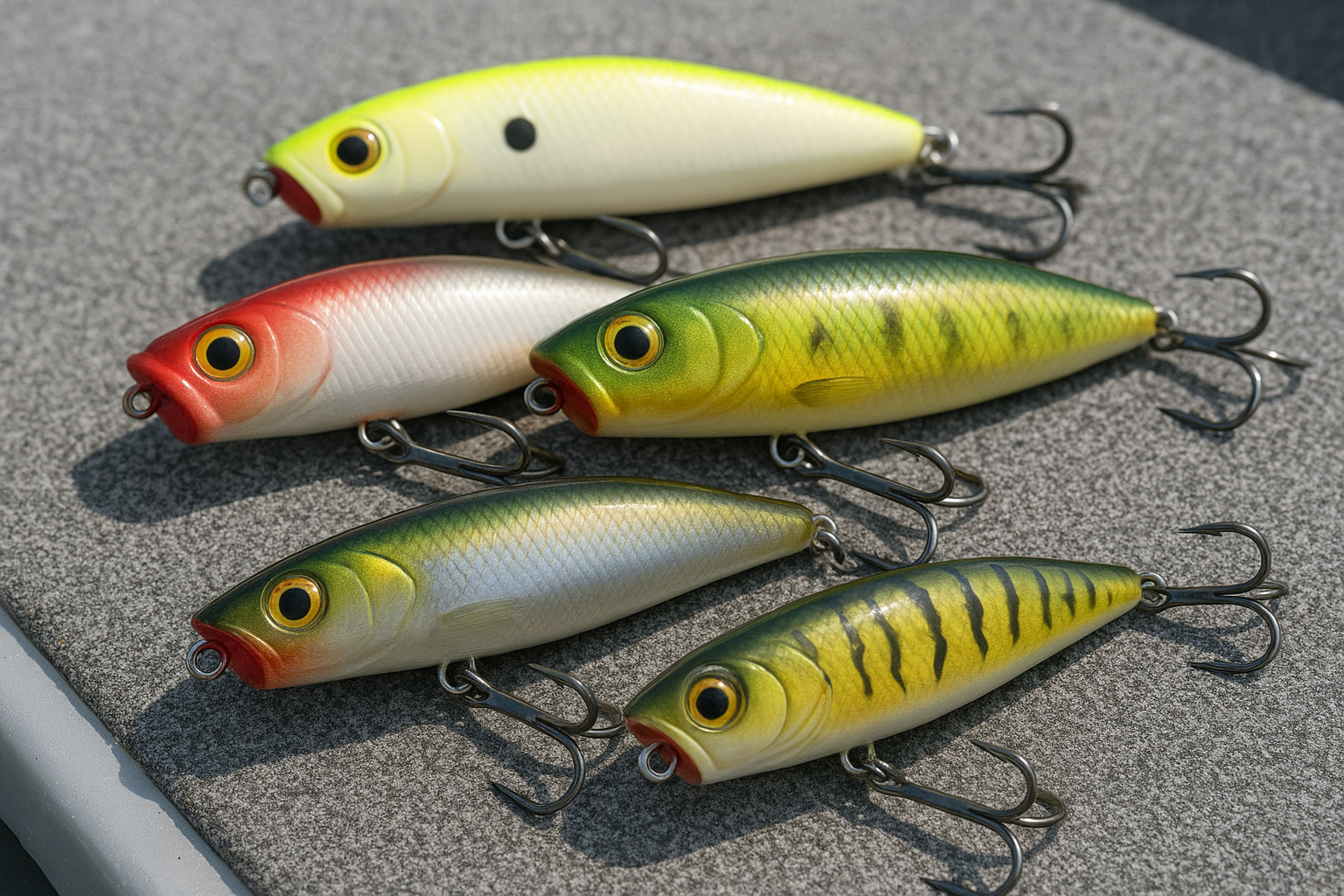
A typical lure selection carried aboard inshore charters for redfish and trout topwater fishing.
Top Spots Near North Myrtle Beach for Redfish and Trout
Several areas around the Grand Strand consistently produce surface strikes. Protected backwater creeks near Cherry Grove and Little River hold grass flats where redfish push bait into the shallows on a rising tide. Similarly, oyster bars along the Intracoastal Waterway near Calabash and Sunset Beach give trout and redfish a firm structure edge to ambush prey.
Murrells Inlet and Ocean Isle Beach also offer productive marsh systems, particularly during early fall when bait schools move through in large numbers. Because conditions vary daily, captains compare several locations each trip rather than relying on a single spot. The bull redfish fishing report highlights how larger fish continue showing up in these same backwater systems later into the season than many anglers expect.
For readers who want species-specific detail, including feeding habits and seasonal movement patterns, the red drum species guide is a helpful next step before booking a trip.
Why Book a Topwater Charter for Redfish and Trout
Fishing unfamiliar water on a tight vacation schedule makes it hard to find active fish quickly. Therefore, many visitors book a private charter instead of guessing at public access points. Licensed captains already know which creeks are holding bait on a given day, which saves valuable fishing time.
North Myrtle Beach Fishing Charters LLC, founded by Captain Keith Logan in 1991, provides private inshore trips built around each group’s experience level and goals. Every trip includes rods, reels, tackle, bait, instruction, and required safety gear, so guests do not need to bring their own equipment. Because trips are private rather than shared seats, captains can focus entirely on the people aboard, whether that means a relaxed family outing or a faster-paced trip for experienced anglers chasing bigger fish. Guests interested in comparing options for redfish-focused trips can review the redfish and flounder charter comparison before booking.
Beyond redfish and trout, regulations around size and creel limits can change seasonally. For the most current rules, the South Carolina Department of Natural Resources publishes updated saltwater fishing regulations, and NOAA Fisheries tracks broader red drum population data along the Atlantic coast.
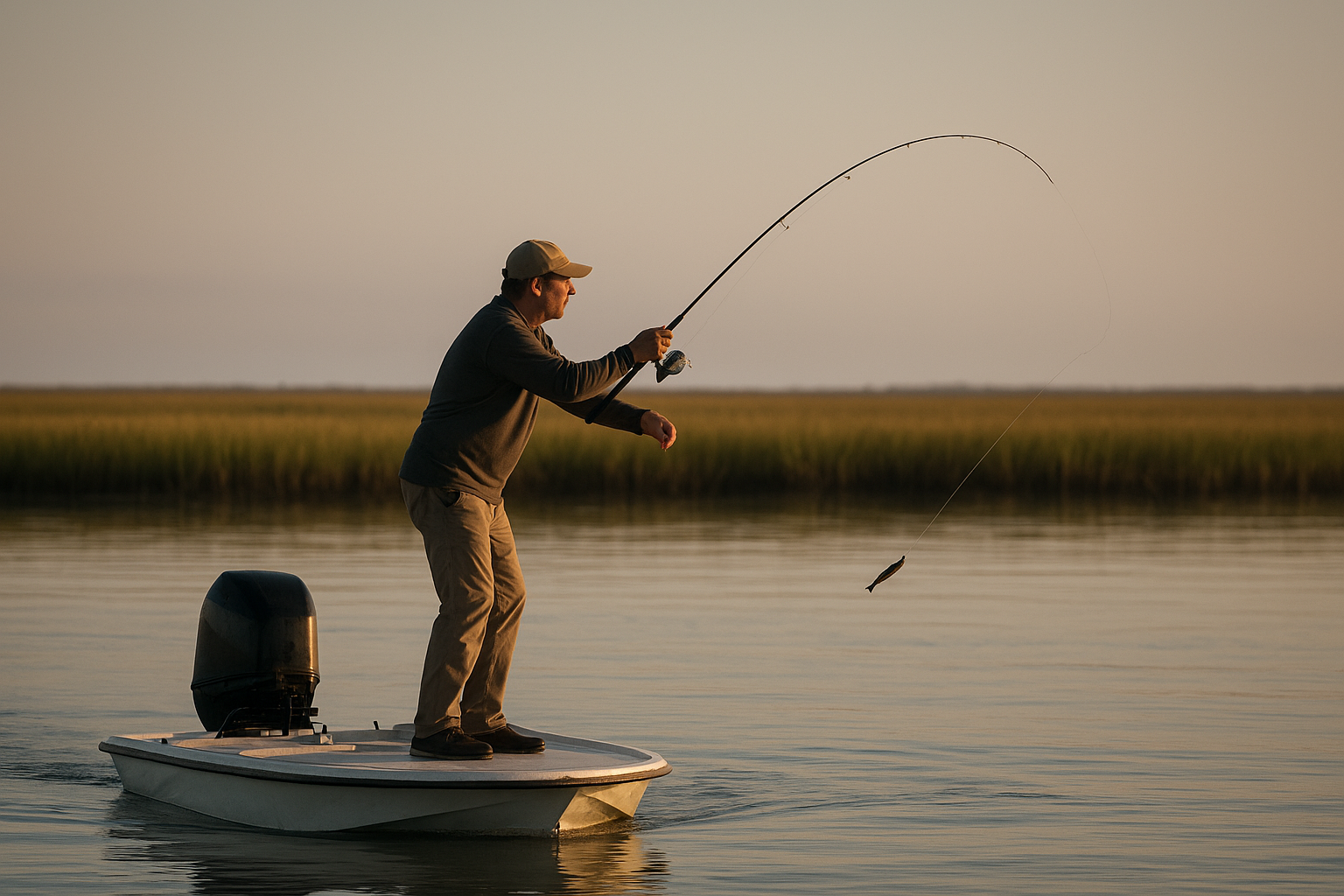
Working a topwater lure across a grass flat during an early morning inshore charter.
Frequently Asked Questions About Myrtle Beach Redfish Trout Topwater Fishing
What is topwater fishing for redfish and trout?
Topwater fishing uses a floating lure fished across the surface so redfish and speckled trout strike it in plain view. It is one of the most visual and exciting ways to target both species in shallow water.
What makes Myrtle Beach redfish trout topwater fishing so productive?
Myrtle Beach redfish trout topwater fishing works well because of shallow grass flats, oyster bars, and creek mouths where both species feed near the surface. Local captains time trips around tide movement and bait activity to improve the odds of a surface strike.
When is the best time of year for topwater fishing near North Myrtle Beach?
Late spring through fall, especially September and October, generally produces the most consistent topwater bites. Cooler mornings push baitfish into shallow water, which pulls redfish and trout up to feed near the surface.
What lures work best for redfish and speckled trout on top?
Walk-the-dog style topwater plugs in natural or chartreuse colors are a dependable choice for both species. Many captains also carry a popper-style lure as a backup when the water has more chop.
How do I work a topwater lure correctly?
Cast past the target, let the lure sit until the rings disappear, then use short wrist snaps to create a side-to-side walking action. Consistent cadence usually draws more strikes than fast, erratic retrieves.
Why do redfish and trout hit topwater lures instead of sinking baits?
Both species are opportunistic feeders that key in on surface commotion, which mimics fleeing baitfish or shrimp. In skinny water, a topwater presentation can trigger a reaction strike faster than a bait sitting on the bottom.
Is there a difference between fishing topwater for redfish versus trout?
Redfish tend to blow up on a lure fished over firmer bottom near oyster bars, while trout often hit a slightly faster retrieve over grass flats. Captains frequently adjust cadence and lure size depending on which species is actively feeding that day.
How much does a private topwater fishing charter near Myrtle Beach cost?
Pricing depends on trip length, boat size, and group size, since every charter is private rather than a shared seat booking. Guests can review current rates or request a quote through the online reservation system.
How long does a typical inshore topwater trip last?
Most inshore topwater trips run three to five hours, which is usually enough time to fish multiple tide stages. Longer charters can be arranged for groups who want to cover more water.
What is the biggest mistake anglers make with topwater lures?
The most common mistake is setting the hook too early, before the fish fully commits to the lure. Waiting half a second and reeling into tension usually results in a more solid hookup.
Is Myrtle Beach redfish trout topwater fishing good for beginners?
Yes, topwater fishing is beginner friendly because strikes happen in plain sight, which makes timing easier to learn. Guided charters also provide hands-on instruction so new anglers can practice the retrieve with a captain nearby.
What time of day produces the best topwater bites?
Early morning and the last hour of daylight are usually the most active windows for surface strikes. Overcast days can also extend good topwater activity further into the morning.
Do I need to bring my own fishing gear for a charter?
No, rods, reels, tackle, and bait are provided on every charter, along with required safety equipment. Guests only need to bring sun protection, water, and weather-appropriate clothing.
Can children fish topwater lures on a family charter?
Yes, captains regularly adjust pace and casting distance so children and beginners can participate safely. Trips are planned around the group’s comfort level, so kids can start with shorter casts before working up to longer retrieves.
Final Thoughts on Topwater Season
Myrtle Beach redfish trout topwater fishing rewards anglers who pay attention to tide movement, bait activity, and a patient retrieve. Because conditions change daily across creeks, flats, and oyster bars, having a captain who fishes these waters year-round makes a real difference in results. From lure selection to timing a cast around a feeding fish, small details separate a quiet morning from an exciting one. Above all, matching the trip to the group’s experience level, whether that means a relaxed family outing or a faster-paced session for seasoned anglers, keeps the day enjoyable on the water. Guests ready to chase a topwater blow-up firsthand can book a private charter online or reach out by phone or text for help choosing the right trip.