
How to prepare for a hands-on fishing instruction tour comes down to a handful of simple choices: what you wear, what you pack, and understanding what the captain will teach once you’re on the water. Unlike a standard charter focused purely on catching fish, a hands-on instruction trip walks you through casting, baiting, and reading the water step by step. With the right preparation, even someone who has never held a rod can feel confident within the first hour.
Quick Answer
To prepare for a hands-on fishing instruction tour, dress in sun-protective layers with non-slip shoes, pack sunscreen and water, confirm your departure dock in advance, and arrive early for the safety briefing. Rods, bait, and instruction are provided, so the focus is on showing up ready to learn.
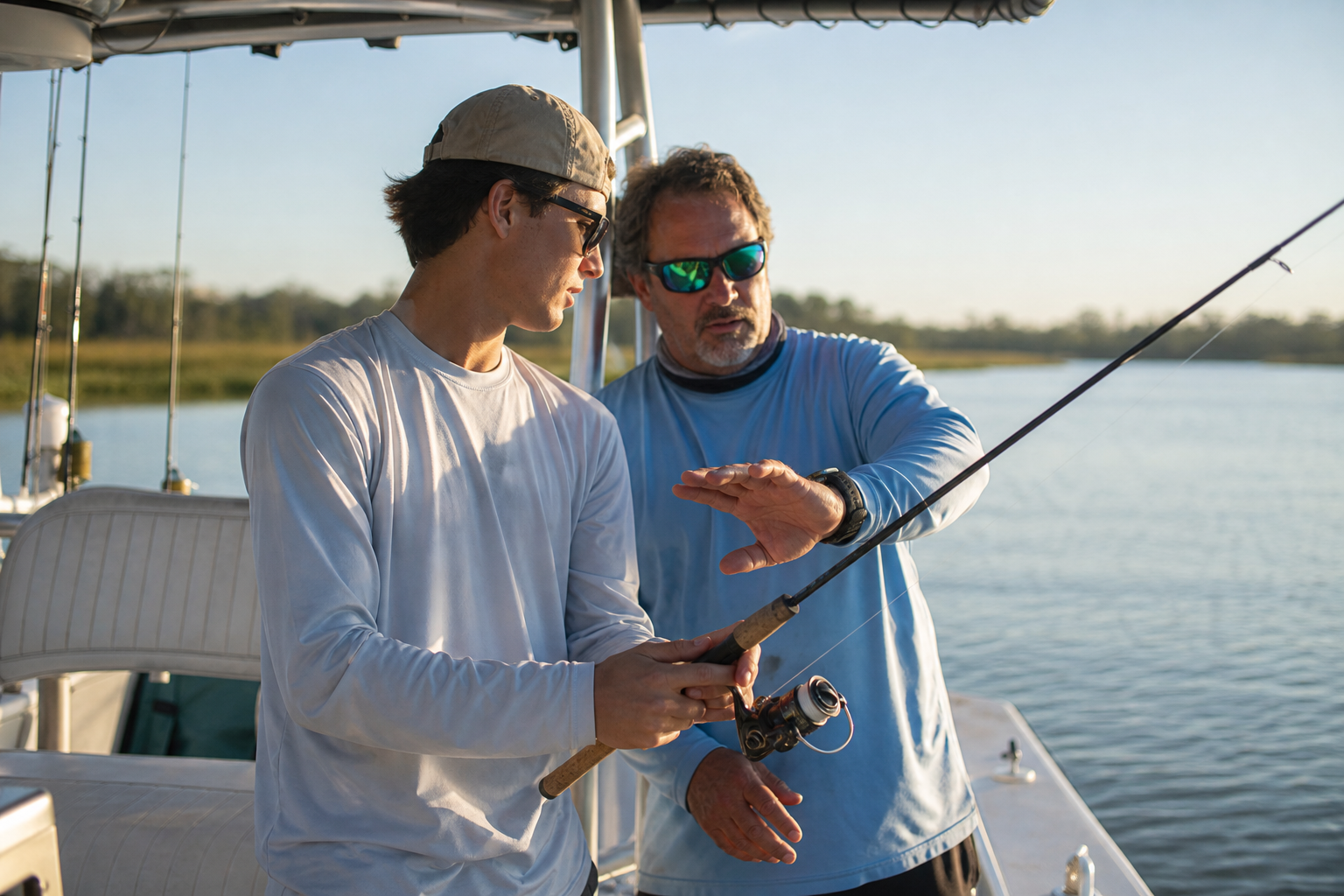
Learning proper casting form is often the first lesson on a hands-on fishing instruction tour.
What Is a Hands-On Fishing Instruction Tour?
A hands-on fishing instruction tour is a private charter built around teaching, not just catching. Instead of the captain doing most of the work, guests actively practice casting, baiting hooks, setting the drag, and interpreting tide and bait movement under direct guidance. This format works well for beginners, families, and vacationing groups who want to leave the dock with real skills, not just photos.
Because every trip is private, the pace adjusts to the group. For example, a family with young children may spend more time on simple rigging basics, while an experienced angler wanting to learn offshore tactics may move quickly into bait presentation and fighting technique. As a result, no two instruction trips look exactly the same.
How to Prepare for a Hands-On Fishing Instruction Tour
Preparation mostly involves clothing, comfort items, and timing rather than gear, since rods, reels, bait, and safety equipment are already provided. Specifically, guests should think through sun exposure, footing on a moving deck, and arriving with enough time to hear the safety briefing before fishing begins.
What to Wear for Your Fishing Instruction Charter
Lightweight, quick-drying clothing works best, since spray and bait handling are part of hands-on learning. In addition, a hat and polarized sunglasses reduce glare and make it easier to spot bait schools or fish near the surface, which is often part of the lesson itself.
Footwear matters more than most first-timers expect. Rubber-soled, non-marking shoes grip a wet deck far better than sandals or sneakers with hard soles. On cooler mornings or longer offshore instruction trips, a light windbreaker is a smart addition, since ocean air temperature can feel noticeably cooler than air temperature on land.
Gear and Items to Bring for Hands-On Fishing Lessons
Because fishing equipment, tackle, bait, and required safety gear are included, packing stays simple. Below is a practical checklist many guests find useful:
- Reef-safe sunscreen and lip balm with SPF
- Reusable water bottle and light snacks
- Non-slip, closed-toe or strapped water shoes
- Polarized sunglasses and a secured hat
- Motion sickness remedy, if needed, taken before boarding
- Camera or phone in a waterproof pouch
For additional guidance on what to expect your first time out, the first-time fishing charter tips guide covers related dock-day basics in more depth.
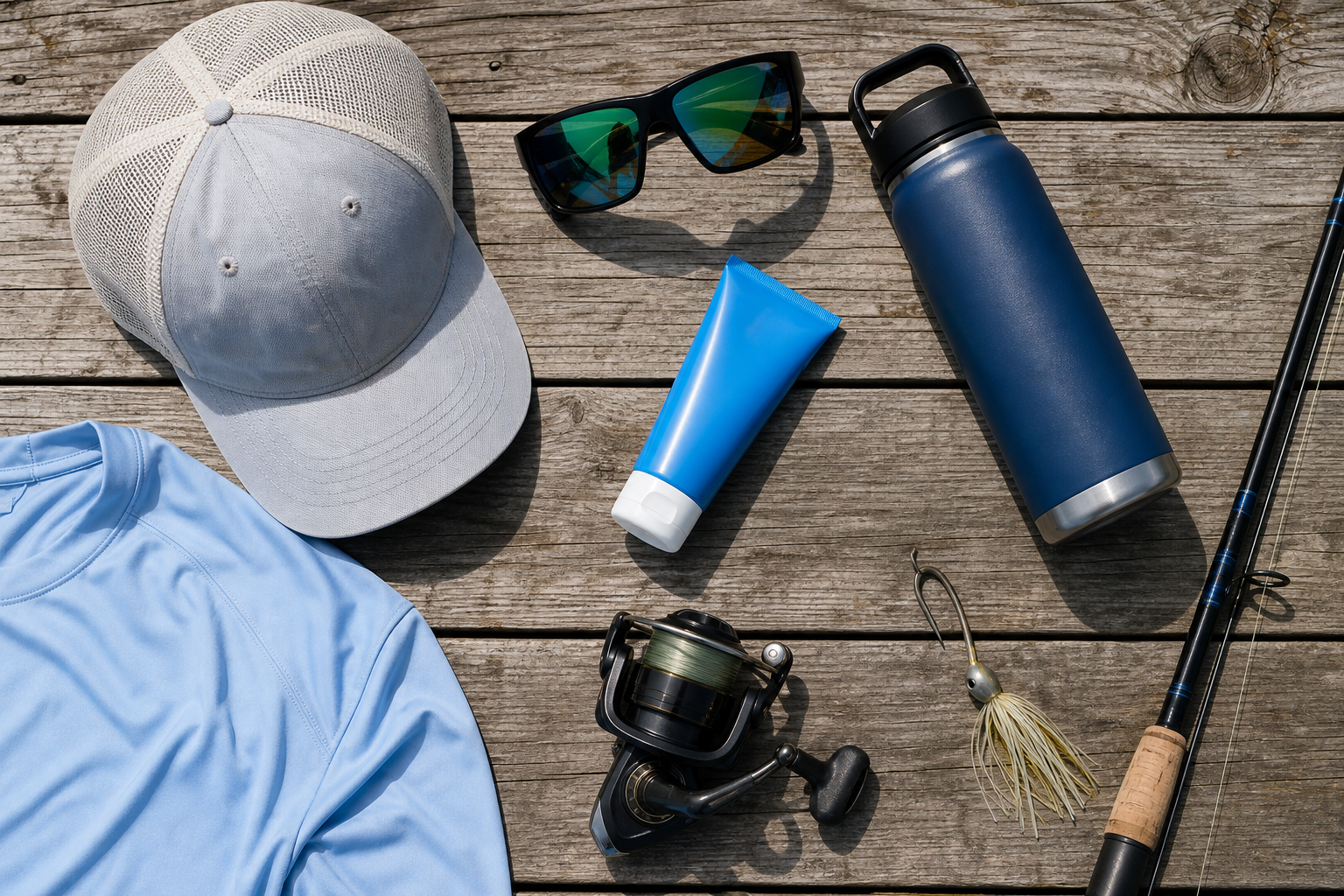
Simple preparation items can make a hands-on fishing instruction tour far more comfortable.
Step-by-Step: Preparing for Your First Hands-On Fishing Trip
Following a simple sequence removes most of the guesswork. Here is the process most guests follow before boarding:
- Book the right trip type. Select an inshore, nearshore, or offshore instruction trip based on your group’s experience level and available time.
- Confirm trip details in advance. Verify the departure dock, start time, and group size with the captain a day or two beforehand.
- Pack sun protection and comfort items. Bring sunscreen, water, a hat, and light snacks since sun exposure builds quickly on open water.
- Choose non-slip, weather-appropriate clothing. Quick-drying layers and rubber-soled shoes handle wet decks and shifting weather better than casual clothing.
- Arrive early and listen to the safety briefing. Arriving at least fifteen minutes early allows time for the captain’s safety overview before hands-on instruction begins.
According to the NOAA Fisheries, recreational fishing participation in the United States has remained consistently high for decades, which partly explains why hands-on instruction trips have grown in popularity among first-time anglers wanting a structured introduction.
Preparing Kids and Beginners for a Fishing Instruction Tour
Families often ask how to get children ready for their first real fishing experience. Generally, shorter inshore trips with calmer water work better for younger kids, since the pace stays relaxed and casting practice happens close to the boat.
For more specific guidance, the guide on preparing kids for fishing and the beginner’s guide to family fishing both offer additional detail on snacks, attention spans, and realistic expectations for young anglers.
What to Expect During Your Private Fishing Lesson
Once aboard, the captain typically starts with a short safety briefing, followed by an explanation of the gear being used that day. From there, instruction usually moves into casting practice, baiting technique, and finally applying those skills as fish are located using tides, water temperature, and bait movement.
Trips focused on offshore or Gulf Stream instruction take this further, introducing concepts like trolling speed and fighting larger fish. Guests curious about that step up in difficulty can review the plain-language explanation of deep-sea fishing before booking a longer instructional trip. Readers can also explore the full range of hands-on fishing instruction trips available along the Grand Strand.
Common Mistakes to Avoid Before Your Fishing Instruction Tour
A few avoidable missteps show up repeatedly among first-time charter guests. Skipping sunscreen is one of the most common, since clouds can mask strong UV exposure on open water. Similarly, wearing slick-soled shoes makes it harder to stay steady while practicing casting technique.
Other frequent mistakes include forgetting to confirm the exact dock location, not mentioning motion sensitivity ahead of time, and arriving right at departure time instead of a few minutes early. Captains, licensed by the U.S. Coast Guard, plan each trip around current conditions, so clear communication beforehand helps the day run smoothly from the first cast.
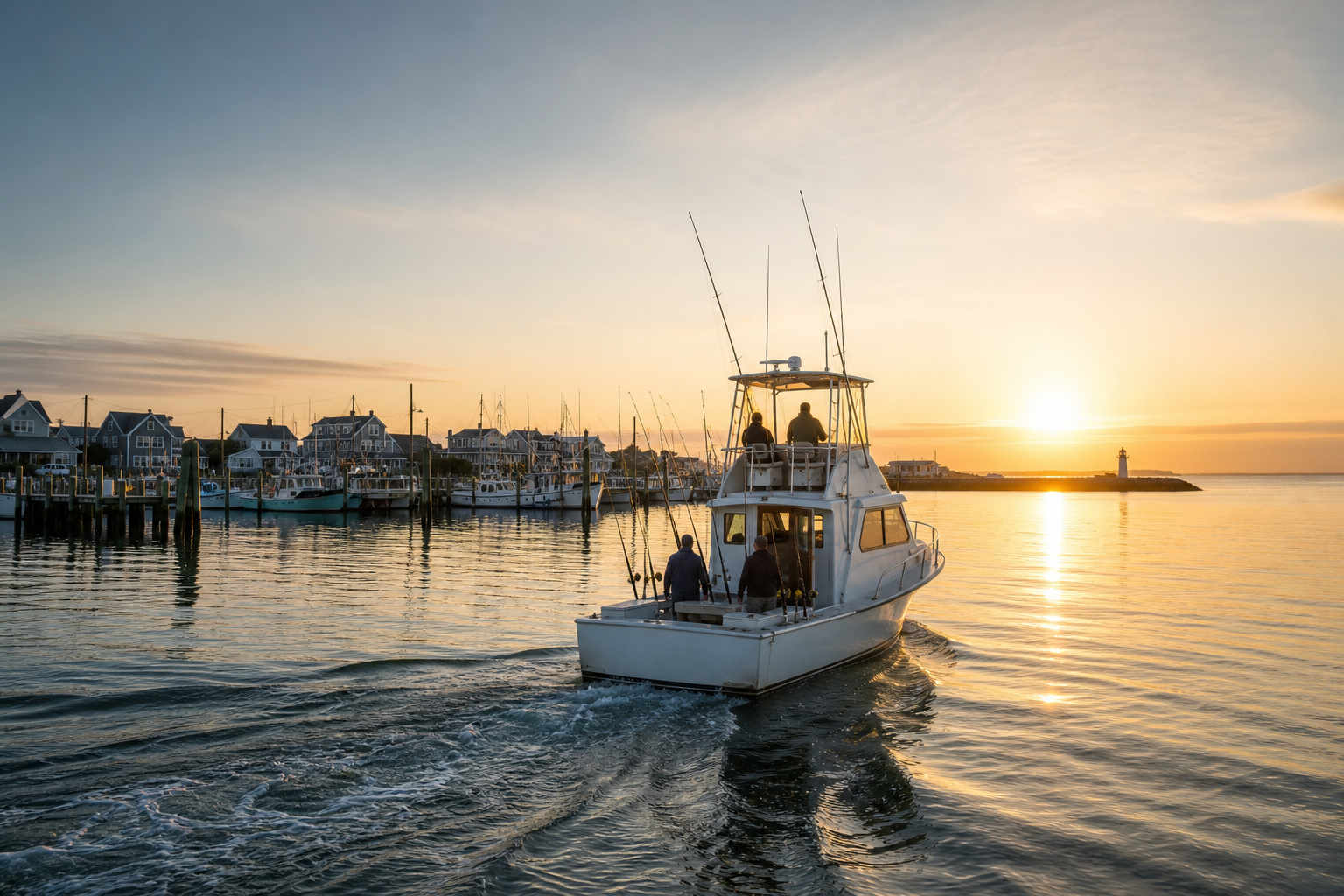
Early departures are common for hands-on fishing instruction tours along the Grand Strand.
Frequently Asked Questions
What is a hands-on fishing instruction tour?
A hands-on fishing instruction tour is a private charter trip focused on teaching guests fishing skills, such as casting, baiting a hook, and reading tide movement, rather than simply catching fish. A licensed captain guides each step directly, making it ideal for beginners, families, and anyone wanting to build real skills on the water.
How do I prepare for a hands-on fishing instruction tour?
To prepare for a hands-on fishing instruction tour, confirm your trip time, dress in layered sun-protective clothing, bring non-slip shoes, and arrive with sunscreen, water, and a motion-sickness remedy if needed. Most gear, including rods and bait, is provided by the charter, so packing light is usually best.
What should I wear on a fishing instruction charter?
Wear lightweight, quick-drying clothing, a hat, polarized sunglasses, and non-marking rubber-soled shoes for grip on a wet deck. A light jacket is useful for early morning or offshore trips where ocean air feels cooler than on land.
Do I need to bring my own fishing gear?
No, rods, reels, bait, tackle, and instruction are included with every private charter. Guests only need to bring personal items such as sunscreen, drinks, snacks, and a camera.
How long does a hands-on fishing lesson last?
Most hands-on fishing instruction tours run between three and six hours, depending on the trip type and the group’s goals. Inshore lessons tend to run shorter, while nearshore or offshore instruction trips often take longer.
How much does a hands-on fishing instruction tour cost?
Pricing varies by trip length, boat size, and location, since every charter is private rather than shared. Exact pricing is confirmed during booking based on the specific trip and group size.
Is hands-on fishing instruction good for beginners and kids?
Yes, hands-on instruction is specifically designed for beginners, children, and anyone who has never fished before. Captains adjust pacing, explanations, and casting practice to match each guest’s comfort level and age.
What is the difference between a hands-on fishing lesson and a regular charter?
A regular charter focuses primarily on catching fish, while a hands-on fishing instruction tour emphasizes teaching technique, terminology, and decision-making alongside the fishing itself. Both trip types are private, but instruction trips slow down to explain the reasoning behind each step.
What common mistakes should I avoid before a fishing instruction tour?
Common mistakes include skipping sunscreen, wearing slick-soled shoes, forgetting to confirm the meeting dock, and not mentioning motion sensitivity in advance. Avoiding these issues helps the trip run smoothly from the first cast.
Do I need a fishing license for the trip?
No, required fishing licenses for charter guests are covered as part of the trip. Guests do not need to purchase a separate license before boarding.
What happens if the weather is bad on the day of my tour?
Captains monitor tides, wind, and marine forecasts closely and may adjust the trip location, timing, or reschedule if conditions are unsafe. Guests are contacted directly if weather affects a scheduled charter.
Can I bring food and drinks on board?
Yes, guests are generally welcome to bring snacks, water, and non-alcoholic beverages unless the captain specifies otherwise for a particular boat. Confirming any specific policies during booking is recommended.
What is the best time of year for a hands-on fishing instruction tour?
Spring through fall generally offers the most consistent conditions and active fish movement along the Grand Strand. However, captains adjust techniques for seasonal patterns, so trips are available throughout the year.
How many people can join a private fishing instruction charter?
Inshore boats typically hold up to six guests, while select larger boats accommodate as many as fifteen. Multiple boats can be coordinated for bigger groups such as family reunions or corporate outings.
Final Thoughts on Getting Ready for Your Trip
Ultimately, learning how to prepare for a hands-on fishing instruction tour comes down to simple, practical steps: dress for sun and water, pack light since gear is provided, and arrive early enough to absorb the safety briefing before casting begins. With that groundwork in place, the actual instruction, casting, baiting, and reading the water, becomes the easy part. Guests ready to put this into practice can review available trip options and book a private hands-on fishing instruction tour directly through North Myrtle Beach Fishing Charters LLC, where licensed captains with decades of local experience tailor each lesson to the group aboard.
