
Children fishing trips Myrtle Beach are built around one simple idea: a young angler’s comfort and attention span matter more than a trophy catch. Instead of treating kids like small adults, a well-planned children’s fishing trip picks calmer water, shorter timing, and species that bite often, so the day stays fun from the dock to the ride home. This guide walks parents through age ranges, safety expectations, packing tips, and the mistakes worth avoiding before booking.
Quick answer: A good children’s fishing trip in Myrtle Beach is typically a two to three hour private charter in a protected creek or the Intracoastal Waterway, using light tackle and easy-biting fish like spot and croaker. This setup keeps the water calm, shortens waiting time between bites, and gives a licensed captain room to teach basic skills without overwhelming a young angler.
What Are Children Fishing Trips in Myrtle Beach?
Children fishing trips in Myrtle Beach are private charters planned specifically around a child’s age, energy level, and comfort on a boat, rather than a standard trip scaled down for adults. For example, a captain might choose a sheltered creek over an offshore run simply because the water stays flatter and calmer there.
In practice, this usually means choosing inshore, backwater, or inland waterways close to shore. According to general guidance on recreational fishing, shorter sessions and frequent catches tend to hold a young person’s interest far better than long waits for a single large fish. As a result, local captains lean on species and locations known for steady action rather than size.
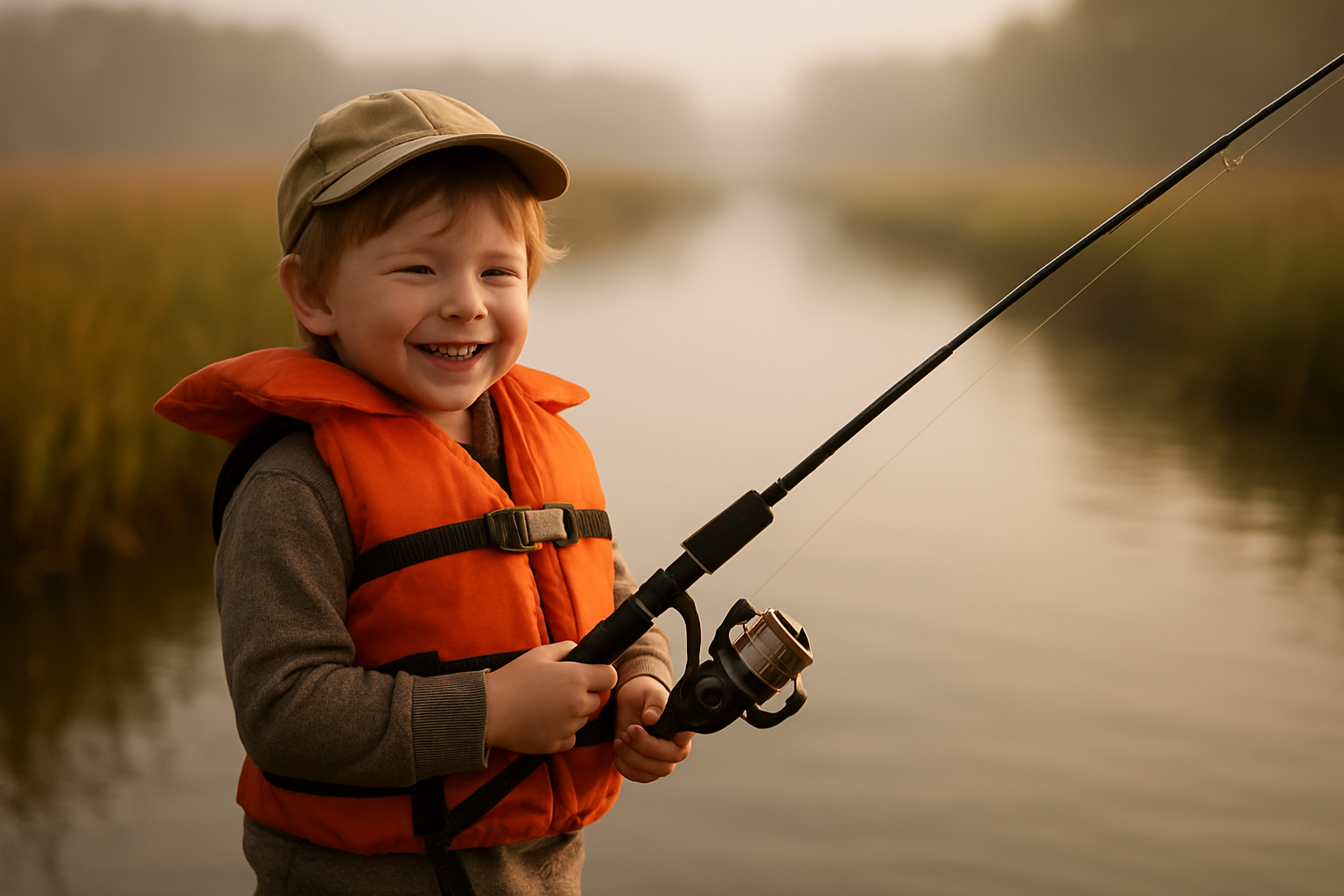
Calm backwater creeks are a common setting for children fishing trips Myrtle Beach families choose for a first outing.
Why Backwater Creeks Work Best for Young Anglers
Backwater creeks, marshes, and the Intracoastal Waterway stay sheltered from ocean swells, so the boat rides smoothly even when conditions offshore look rough. Because of that calmer ride, young anglers are far less likely to feel seasick or anxious during their first time on the water.
Additionally, these protected waters hold species that bite consistently throughout the day, including spot, croaker, and small flounder. In contrast, offshore and Gulf Stream trips involve longer rides and bigger swells, which usually suit older kids or already-experienced junior anglers better. The NOAA Fisheries service notes that inshore estuaries serve as nursery habitat for many coastal species, which helps explain why bite rates stay steady for younger anglers close to shore.
Choosing a Children’s Fishing Trip by Age
Not every child needs the same trip. Matching the outing to age helps set realistic expectations for both the parent and the captain.
Ages 4 to 6
At this age, short attention spans matter most. A one to two hour inshore trip with frequent bites, simple rods, and plenty of parent involvement usually works best.
Ages 7 to 10
Kids in this range can usually handle a two to three hour half-day trip and start learning to bait a hook or reel independently with guidance from the captain.
Ages 11 and Up
Older children and teens who already enjoy fishing may be ready for a longer nearshore or even a short offshore trip, depending on comfort with boat motion and patience for slower bites.
What a Half-Day Trip With Children Looks Like
Knowing what to expect ahead of time helps reduce nerves for both parents and kids. Most half-day children’s fishing trips follow a similar pattern from start to finish.
- Book the right trip and share your child’s age. Choose an inshore or backwater charter and tell the captain your child’s age and experience level so the trip plan, location, and pace can be adjusted in advance.
- Arrive early for a safety briefing. Arrive at the dock a few minutes early so the captain can fit life jackets, explain basic boat safety, and answer any questions before departure.
- Practice casting in calm water. Once the boat reaches sheltered water, the captain walks your child through holding the rod, casting gently, and reeling slowly.
- Target easy-to-catch inshore species. The captain positions the boat near spots holding spot, croaker, or small flounder, since frequent bites build quick confidence.
- Take breaks for snacks and rest. Short breaks every thirty to forty minutes for water, snacks, and shade help young children stay comfortable on longer outings.
- Celebrate every catch together. Encourage your child to help net and handle each fish with guidance, turning small catches into confidence-building moments.
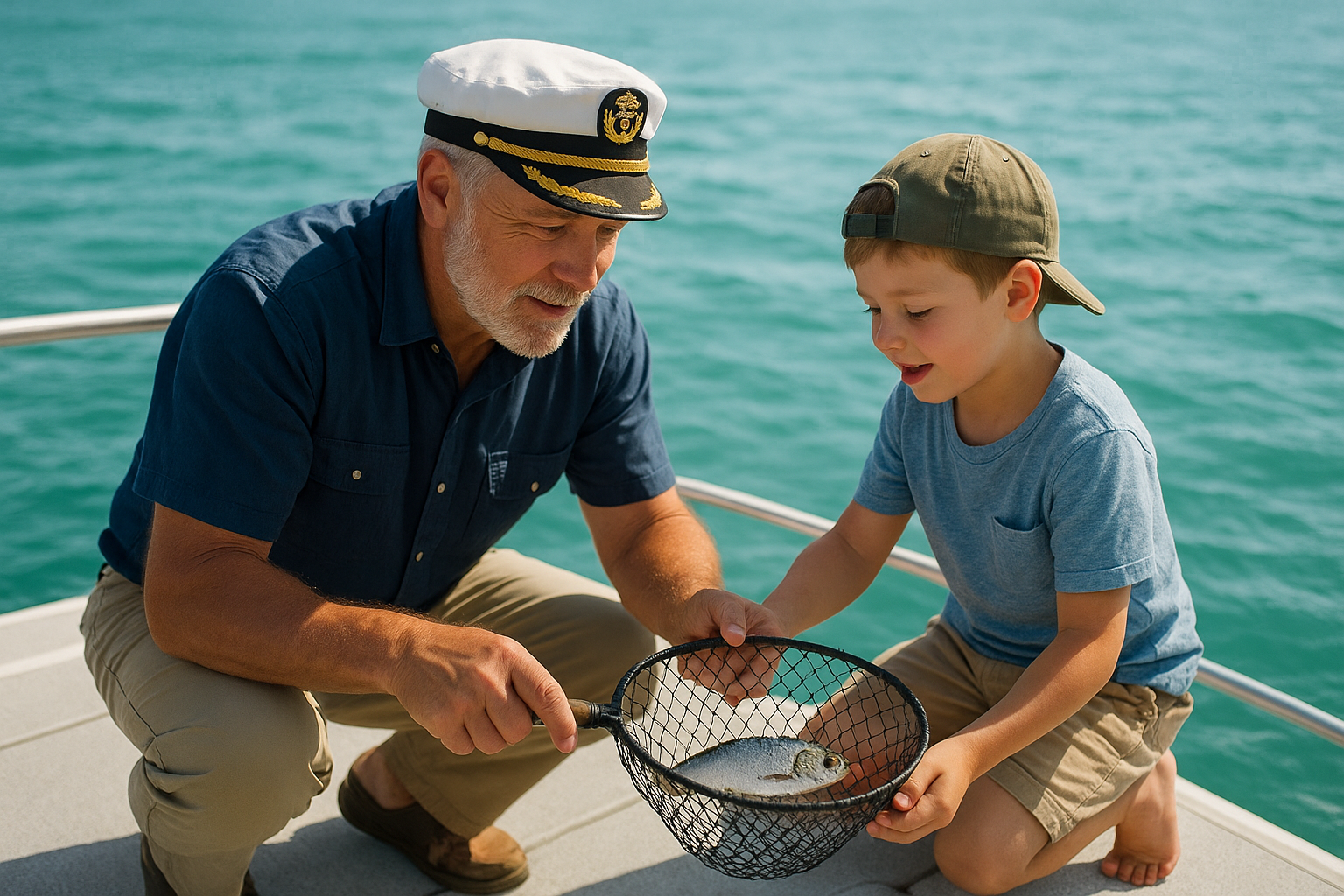
Hands-on guidance from the captain is a core part of most kid-friendly fishing experiences near Myrtle Beach.
Safety Features on Kids Fishing Charters
Safety is the first concern for most parents booking a trip with young children aboard. Properly sized life jackets and required onboard safety equipment are part of every charter, and licensed captains walk through basic rules before leaving the dock.
Furthermore, captains hold U.S. Coast Guard licensing, which means they have met formal training and safety standards before operating a charter boat. The U.S. Coast Guard oversees licensing requirements for commercial vessel operators, giving parents a verifiable safety baseline when choosing kids fishing charters. Because routes stay close to shore on most children’s trips, help is also never far away if needed.
What to Pack for Your Children’s Fishing Trip
A little preparation goes a long way toward keeping kids comfortable for the entire outing. Consider packing the following before heading to the dock:
- Reef-safe sunscreen and a wide-brim hat or cap
- Polarized sunglasses to cut glare off the water
- Water bottles and light, easy-to-eat snacks
- A spare set of clothes in a waterproof bag
- Closed-toe shoes with grip and a light jacket for cooler mornings
Specifically, snacks matter more than most parents expect, since low blood sugar can turn an excited child cranky fast. In addition, bringing a backup outfit avoids a long, uncomfortable ride home if splashes happen.
Mistakes Parents Make Booking Children Fishing Trips Myrtle Beach
Even well-meaning parents sometimes set up a frustrating day without realizing it. One frequent mistake is booking a long offshore or Gulf Stream trip for a first-timer, which can lead to seasickness or boredom during slow stretches between bites.
Another common issue is skipping the conversation with the captain about the child’s age and experience. Since every boat and route is different, sharing details in advance, as outlined on North Myrtle Beach Fishing Charters, helps the captain match the trip length, location, and target species to what the child can realistically enjoy. Similarly, forgetting sunscreen, snacks, or a backup set of clothes can quietly shorten an otherwise good day.
Frequently Asked Questions About Children Fishing Trips Myrtle Beach
What are children fishing trips in Myrtle Beach?
Children fishing trips Myrtle Beach are private charter outings built around a child’s age, attention span, and comfort level rather than a standard adult trip. Captains typically choose calm inshore or backwater waters and shorten trip length to match what young anglers can handle.
What age can a child start fishing on a charter?
Most captains welcome children as young as four or five on calm inshore trips, though every child is different. Parents should mention their child’s age when booking so the captain can plan the right pace and location.
How long should a children’s fishing trip last?
A two to three hour half-day trip usually works best for young anglers, especially first-timers. Longer trips can be considered once a child shows strong interest and stamina on the water.
How much does a children’s fishing trip cost?
Pricing varies by boat size, trip length, and location, since every charter is private rather than sold by the seat. Contacting the charter directly or checking the online booking system gives the most accurate, current pricing for a specific date and group size.
What is the difference between inshore and offshore trips for kids?
Inshore and backwater trips stay in protected creeks and the Intracoastal Waterway, offering calmer water and shorter travel times that suit most children. Offshore and Gulf Stream trips involve longer rides and rougher seas, which are usually better suited to older kids or experienced junior anglers.
Why are backwater creeks better for young anglers?
Backwater creeks and marshes stay sheltered from ocean swells, so boats ride smoothly and seasickness is less likely. These waters also hold species like spot, croaker, and small flounder that bite often, keeping children engaged.
What should I pack for a children’s fishing trip?
Pack sunscreen, a hat, polarized sunglasses, water, light snacks, and a change of clothes in case anyone gets splashed. Closed-toe shoes with good grip and a light jacket for morning trips are also smart additions.
What safety gear is provided on kids fishing charters?
Required onboard safety equipment, including properly sized life jackets, is provided on every charter. Licensed captains also walk through basic safety steps before the boat leaves the dock.
What is a common mistake parents make when booking a children’s fishing trip?
One common mistake is booking a longer offshore trip before testing a child’s interest and comfort on the water. Starting with a shorter inshore trip helps gauge how a child handles the boat, sun, and waiting between bites.
Can toddlers go on fishing charters?
Very young toddlers can join calmer, shorter inshore trips with a parent close by, though attention spans at that age are limited. Most captains find children closer to four or five get more enjoyment and engagement from the experience.
Do children need a fishing license in South Carolina?
Required fishing licenses for charter guests, including children, are handled as part of the charter booking. Parents do not need to arrange a separate license before the trip, though questions can be checked against the South Carolina Department of Natural Resources for general regulation details.
What fish can kids expect to catch near Myrtle Beach?
Depending on the season and location, young anglers often catch spot, croaker, whiting, small flounder, and black sea bass in inshore waters. Catch results vary with tides, weather, and seasonal fish movement, so no specific species or quantity is guaranteed.
Is seasickness a concern for children on fishing trips?
Seasickness is less likely on sheltered inshore and backwater trips than on offshore runs through open water. Choosing a calmer location and a shorter trip length reduces the chance of a child feeling queasy.
How do captains keep kids engaged during a fishing trip?
Captains target species that bite frequently, let children help bait hooks and reel in fish, and explain what they are doing in simple terms. Short breaks for snacks and water also help maintain a child’s energy and interest.
How do I book a children’s fishing trip in Myrtle Beach?
Guests can book directly through the online reservation system or contact the business by phone or text for help choosing the right trip. Sharing the child’s age, experience level, and available time helps the captain recommend the best option.
Ready to plan a calm, kid-friendly day on the water? Explore family fishing charter options, learn more about kid-friendly fishing in North Myrtle Beach, or check age-specific charter guidance for ages 4 to 10 before booking.
Planning Your Child’s First Fishing Trip
In short, children fishing trips Myrtle Beach work best when the plan fits the child, not the other way around. Choosing calmer inshore or backwater water, keeping the trip length short, packing the right gear, and talking openly with the captain about age and experience all add up to a smoother day. For additional hands-on guidance, families can also review kids fishing lesson options or compare notes with the broader family-friendly fishing guide for the area.
Above all, patience and preparation matter more than landing a big fish. With the right trip length, calm water, and a licensed captain who enjoys teaching, most children walk off the boat already asking when they can go again.
