
Seasonal fish migration patterns around the Grand Strand determine which species show up near North Myrtle Beach, Murrells Inlet, Little River, and the surrounding Carolina coast at any given time of year. As water temperatures shift between winter and summer, baitfish move, predator species follow, and the best fishing grounds change from protected inshore creeks to offshore wrecks and the Gulf Stream. Therefore, understanding these patterns helps anglers plan smarter trips, whether the goal is redfish in the marsh or mahi-mahi far offshore. This guide breaks down what moves when, and how local captains use that knowledge to put guests on fish throughout the year.
Quick Answer: Seasonal fish migration patterns around the Grand Strand follow water temperature changes. Baitfish and gamefish push into shallow creeks in spring, spread across nearshore and Gulf Stream waters in summer, and retreat to deeper, warmer water in fall and winter. Knowing these shifts helps determine whether a trip should target inshore creeks, nearshore reefs, or offshore structure.
What Are Seasonal Fish Migration Patterns Around the Grand Strand?
Seasonal fish migration patterns around the Grand Strand are the repeating movements of fish species as they follow water temperature, daylight length, and bait toward the conditions that suit them best. In short, fish are not randomly scattered along the coast; they move in response to measurable environmental cues. Fish migration, broadly defined, is the regular movement of fish populations between habitats for feeding, spawning, or temperature comfort, a behavior documented across coastal species worldwide (Wikipedia: Fish migration).
Along the Grand Strand specifically, this plays out across three zones: the protected inshore creeks and Intracoastal Waterway, the nearshore waters within a few miles of the beach, and the offshore wrecks and Gulf Stream farther out. As a result, a species that is abundant inshore in April may be scarce there by July, having moved to cooler or deeper water. Consequently, local captains do not fish the same spots year-round; they shift strategy with the calendar.
Why Fish Movement Timing Matters for Trip Planning
Fish movement timing matters because booking the wrong trip type for the season can mean targeting water that the fish have already left. For example, an inshore trip booked in the dead of winter may produce fewer bites than the same trip in April, simply because fish have moved to deeper refuge. Similarly, a Gulf Stream trip planned before pelagic species arrive in warm blue water may be less productive than one timed to early summer.
In addition, weather and water conditions can speed up or slow down a typical pattern. According to the NOAA Fisheries service, coastal water temperatures along the Southeast can vary several degrees from one year to the next, which shifts migration timing earlier or later than average. Because of this, captains check current conditions rather than relying only on the calendar date.
Spring: Fish Moving Back Into the Shallows
As winter fades, warming water pulls redfish, speckled trout, and flounder back into the creeks, marshes, and backwater channels that make up much of the Grand Strand’s inshore fishery. Bait begins moving into these shallow, sun-warmed areas first, and predator fish follow closely behind. For families and beginners, spring is often an approachable season, since inshore water stays calmer than nearshore or offshore trips.
Anglers exploring this inshore versus nearshore distinction in more depth can review this breakdown of inshore vs. nearshore fishing in the Grand Strand for a closer comparison of each approach.
Summer: Nearshore Activity and Gulf Stream Access
By early summer, warmer nearshore water draws king mackerel, Spanish mackerel, and cobia closer to structure such as nearshore reefs and live bottom. Meanwhile, farther offshore, the Gulf Stream often pushes closer to shore, bringing mahi-mahi and other pelagic species within reach of a day trip. Consequently, summer tends to offer the widest range of trip options along the Grand Strand, from quick nearshore outings to full-day offshore adventures.
For a closer look at what nearshore trips typically target this time of year, this guide to South Carolina nearshore fishing covers common species and tactics in more detail.
| Season | Primary Zone | Commonly Targeted Species* |
|---|---|---|
| Spring | Inshore creeks, Intracoastal Waterway | Redfish, speckled trout, flounder |
| Summer | Nearshore reefs, Gulf Stream | King mackerel, cobia, mahi-mahi |
| Fall | Inshore and nearshore transition zones | Redfish, Spanish mackerel, flounder |
| Winter | Deeper inshore holes, nearshore structure | Black drum, sheepshead, select trout |
*Fishing opportunities vary by year, weather, and water conditions; species and catch are never guaranteed.
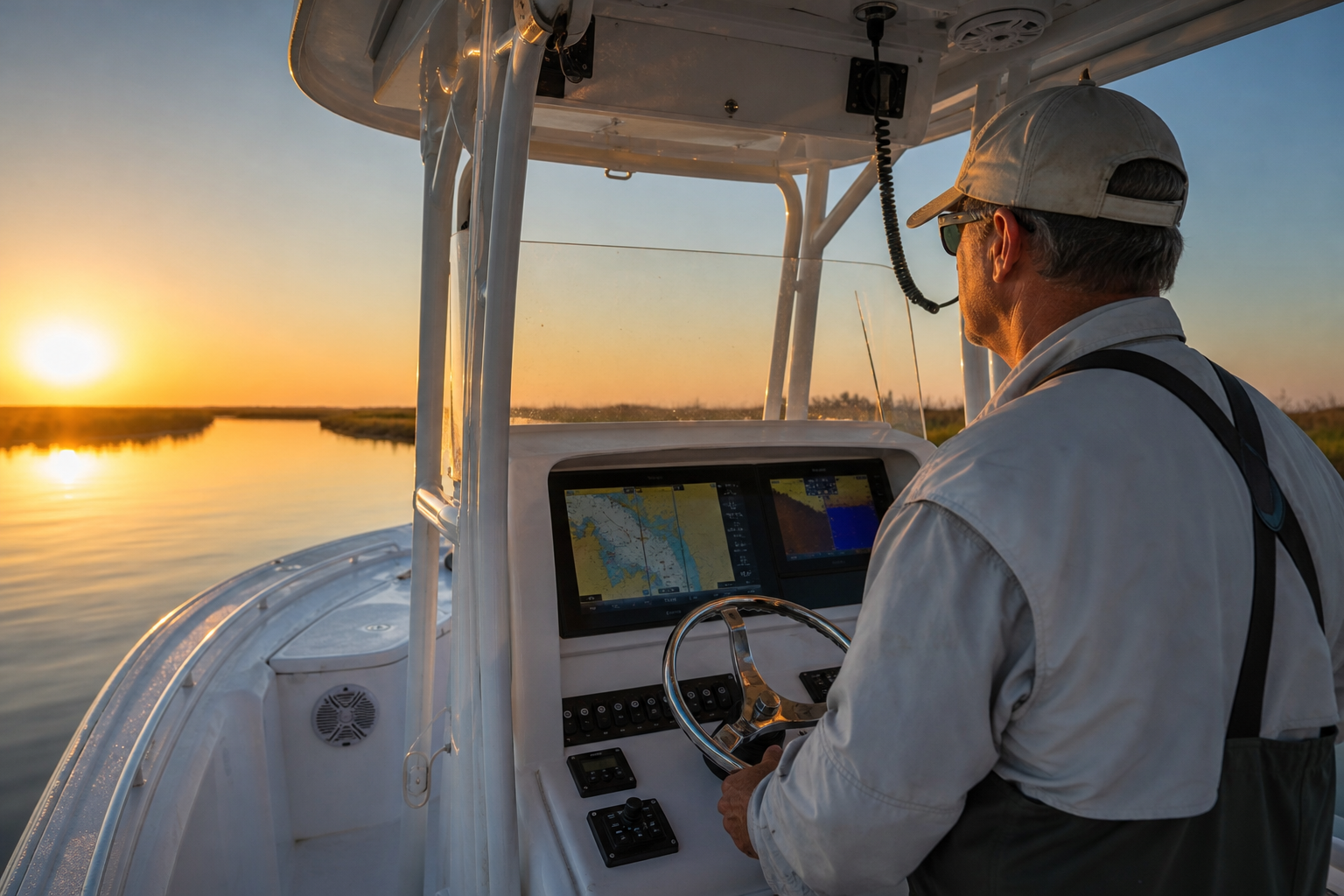
Reading water conditions at sunrise is one way captains track seasonal fish migration patterns around the Grand Strand before a trip begins.
Fall Migration: Cooling Water and Moving Baitfish
As water begins to cool in autumn, large schools of baitfish move along the beach and through the inlets, and predator species follow in force. Redfish often school up heavily during this period, while Spanish mackerel and flounder remain active in nearshore and inshore water before the first hard cold fronts arrive. For many local anglers, fall is considered one of the most productive windows of the year.
To see a fuller seasonal breakdown of what is typically available trip by trip, this resource on seasonal fish available on a charter walks through expectations month by month.
Winter Fish Behavior Near North Myrtle Beach
Once water temperatures drop further, many species retreat to deeper holes, channel edges, and warmer pockets of water where conditions stay more stable. Black drum and sheepshead often become more reliable inshore targets during this period, since they tolerate cooler water better than some summer species. Similarly, nearshore structure can still hold fish, though trips typically depend more heavily on day-to-day conditions in winter than in warmer months.
Winter is also when the South Carolina coastline itself plays a bigger role in trip planning, since sheltered waters near South Carolina’s Grand Strand region often fish better than fully exposed nearshore water when fronts move through.
How Local Captains Track Seasonal Migration
Because fish migration does not follow a rigid calendar, captains rely on a repeatable process to decide where to fish each day. The following steps outline that process in order.
- Monitor water temperature trends: Captains track surface water temperature daily, since even small shifts can trigger fish to move toward or away from certain depths and structure.
- Watch baitfish and bird activity: Observing where baitfish schools and diving birds gather helps captains locate the forage that predator species are actively following that week.
- Review tide charts and current strength: Tide timing and current speed influence how aggressively fish feed in creeks, inlets, and nearshore structure, so trip windows are planned around moving water.
- Cross-reference recent fishing reports and logs: Comparing recent catch reports with years of personal trip logs helps confirm whether a seasonal pattern is arriving on schedule or running early or late.
- Adjust the trip plan on departure day: Using same-day conditions, captains make a final call on location and technique, choosing between inshore, nearshore, or offshore water to match the group’s goals.
This process reflects decades of accumulated, firsthand experience along the Grand Strand, including the more than 40 years Captain Keith Logan has spent fishing these waters. Data from the South Carolina Department of Natural Resources on regional water temperature and species surveys also supports the general seasonal windows captains use, though conditions can shift slightly from year to year.
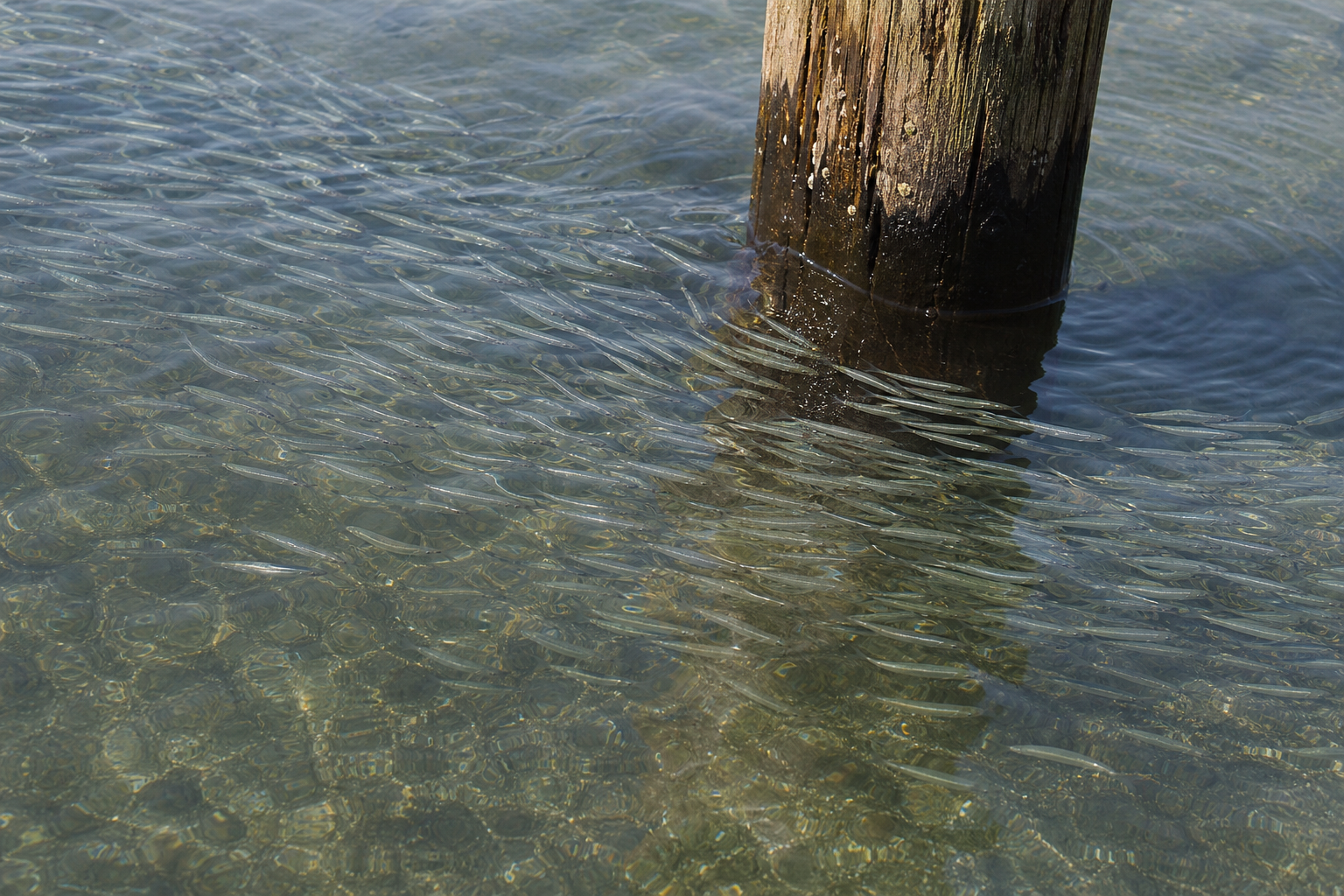
Baitfish movement is one of the clearest early signs of a seasonal shift along the coast.
Choosing a Charter Based on the Season
Given how much seasonal fish migration patterns around the Grand Strand can affect a trip, matching the charter type to the time of year is one of the most useful planning steps an angler can take. Spring and fall often favor inshore and backwater trips, while summer opens up nearshore and Gulf Stream options. Winter, meanwhile, tends to favor shorter, more targeted inshore outings.
For trips reaching deeper, warmer water offshore, this guide on Gulf Stream fishing trips out of the Grand Strand explains what to expect before booking. North Myrtle Beach Fishing Charters LLC coordinates private trips across all of these zones, matching guests to the right boat and season rather than offering a single fixed itinerary. Guests can review current options directly at northmyrtlebeachfishingcharters.com or reach out by phone or text for help choosing a trip.
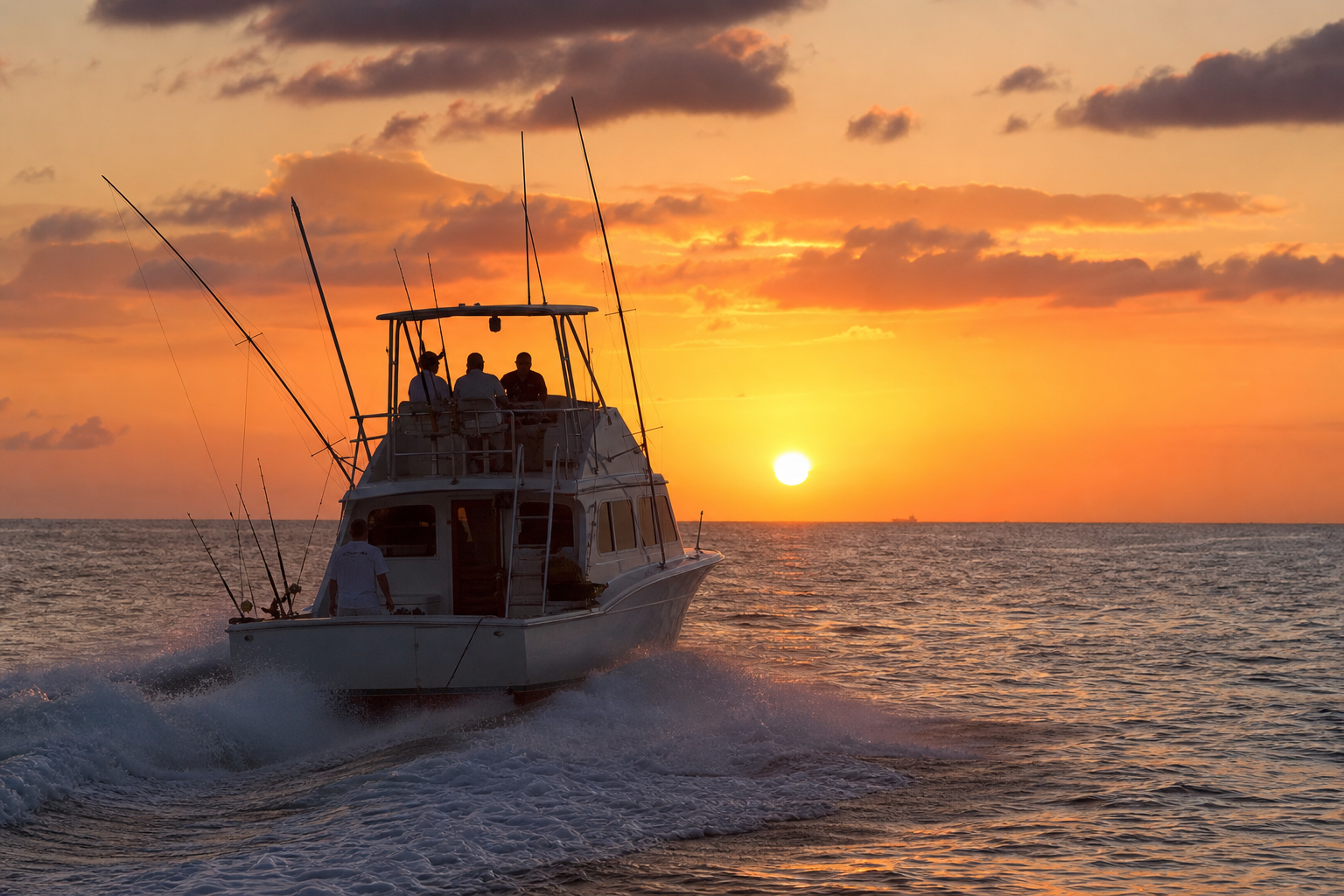
Offshore trips often become more productive as seasonal fish migration patterns around the Grand Strand push warmer water closer to shore.
Frequently Asked Questions About Seasonal Fish Migration Patterns Around the Grand Strand
What are seasonal fish migration patterns around the Grand Strand?
Seasonal fish migration patterns around the Grand Strand are the predictable shifts in where fish live and feed as water temperature, daylight, and bait availability change throughout the year. These patterns move fish between inshore creeks, nearshore waters, and offshore zones like the Gulf Stream.
How does water temperature affect fish migration along the Grand Strand?
Water temperature is the main trigger for movement, since most coastal species seek a comfortable thermal range. As water warms in spring, fish move toward shallow creeks and marsh edges, and as it cools in fall, they retreat toward deeper, more stable water.
Why do charter captains plan trips around seasonal fish migration?
Captains plan around migration timing because it directly affects where fish are concentrated on any given day. Matching the trip location and technique to the season improves the odds of a productive outing.
What fish are common inshore near North Myrtle Beach in spring?
Spring typically brings redfish, speckled trout, and flounder back into the creeks, marshes, and Intracoastal Waterway as water warms. These species follow bait into shallower, protected water during this transition.
Which species move farther offshore during summer months?
During summer, king mackerel, Spanish mackerel, cobia, and mahi-mahi become more available in nearshore and Gulf Stream waters. Warmer surface temperatures push some species beyond the immediate coastline.
When does king mackerel season typically peak along the Grand Strand?
King mackerel activity generally peaks from late spring through summer as nearshore waters warm and baitfish schools concentrate. Exact timing shifts slightly from year to year based on conditions.
What is the difference between inshore and nearshore migration timing?
Inshore species in creeks and marshes tend to respond quickly to small temperature shifts, while nearshore and offshore species often arrive later as the open ocean warms more gradually. This lag means inshore fishing can turn on weeks before nearshore action peaks.
How much does a private fishing charter typically cost?
Pricing depends on trip type, boat size, and trip length, since inshore, nearshore, and Gulf Stream charters all use different vessels and travel distances. Current rates and available dates can be confirmed through the online booking system.
How long does a typical Grand Strand fishing charter last?
Trip length varies by type, with inshore trips often running a few hours and offshore or Gulf Stream trips taking a full day. Captains can help match trip length to the group’s schedule and goals.
What mistakes do anglers make when planning around fish migration?
A common mistake is targeting a species after it has already moved to different water, based on outdated information. Checking current conditions with a local captain, rather than relying on last season’s pattern, helps avoid this.
What is the best time of year to book a Gulf Stream trip?
Gulf Stream trips are often most productive from late spring through early fall, when warm blue water pushes closer to shore and pelagic species like mahi-mahi are active. Conditions still vary by year, so checking with a captain before booking is recommended.
Can beginners still catch fish during migration transition periods?
Yes, beginners can still catch fish during transition periods, since captains adjust technique and location rather than relying on one fixed spot. Private charters are planned around the group’s experience level regardless of the season.
Final Thoughts on Planning Around Migration
In the end, seasonal fish migration patterns around the Grand Strand shape nearly every decision a charter captain makes, from which boat to run to which stretch of water to fish first. Spring and fall tend to favor inshore and backwater trips, summer opens the door to nearshore and Gulf Stream opportunities, and winter rewards patience and local knowledge. As a result, anglers who plan their trip type around the season, rather than a fixed date on the calendar, tend to have more consistent days on the water. For guests ready to put this into practice, a private charter with North Myrtle Beach Fishing Charters LLC can be matched to the current season, group size, and comfort level through the online booking system or a quick call or text to the crew.
