
Myrtle Beach shark season charter trips give anglers a front-row seat to one of the Atlantic coast’s most exciting nearshore fisheries. As water temperatures climb along the Grand Strand each year, migratory shark species move closer to shore, creating fast-paced action for families, beginners, and experienced anglers alike. Because every trip through North Myrtle Beach Fishing Charters is private, captains can plan the day entirely around your group’s comfort level, fishing goals, and available time.
Quick answer: Myrtle Beach shark season charter trips run primarily from late spring through early fall, when warming coastal waters draw blacktip, spinner, sandbar, and bonnethead sharks within reach of private boats. Licensed captains provide the boat, tackle, bait, and instruction, so no personal gear or prior experience is required.
What Are Myrtle Beach Shark Season Charter Trips?
Myrtle Beach shark season charter trips are private, guided fishing excursions built around the annual movement of shark species through Carolina coastal waters. Unlike a shared head boat, every seat on a private charter belongs to your group alone. As a result, captains can adjust bait, location, and pace specifically for the anglers aboard.
These trips are operated by U.S. Coast Guard–licensed captains who track tides, water temperature, and bait activity daily. In addition, all necessary rods, reels, tackle, and safety equipment are included, so guests simply show up ready to fish. For a closer look at how these outings are structured, the shark fishing charter options page outlines available boats and trip formats.
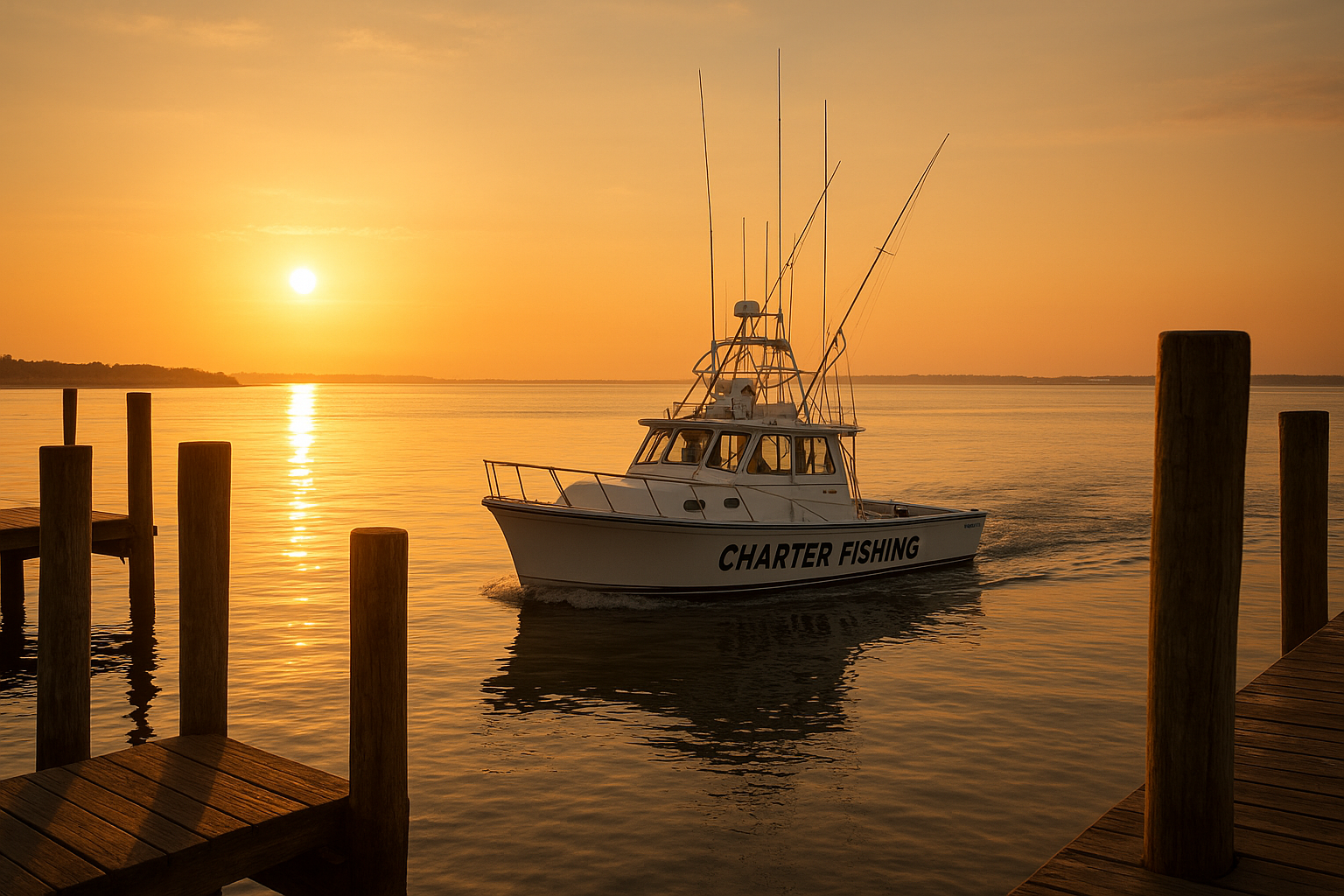
Early departures are common during Myrtle Beach shark season charter trips, when calmer morning water often improves visibility for spotting bait activity.
When Does the Shark Fishing Season Peak Along the Grand Strand?
Generally, shark activity increases as coastal water temperatures rise, typically from late spring through early fall. During these warmer months, baitfish schools move closer to shore, and sharks follow that food source into nearshore Carolina waters. Consequently, this period tends to offer the most consistent action for private charters.
However, exact timing shifts from year to year based on weather patterns and water temperature. Therefore, captains check conditions each morning rather than relying solely on the calendar. For guests planning a trip well in advance, checking directly with the charter about current conditions is the most reliable approach, and the North Myrtle Beach Fishing Charters booking page reflects live availability throughout the season.
Why Seasonal Timing Matters for Shark Charters
Above all, timing affects which species are likely to be present and how far offshore a boat may need to travel. For example, smaller coastal species often stay closer to the beach early in the season, while some larger sharks may require a run toward deeper structure later in the summer. As a result, captains often recommend flexible dates when possible to take advantage of the best conditions.
Shark Species Anglers Commonly Encounter
Blacktip, spinner, sandbar, and bonnethead sharks are among the species most often encountered on nearshore Carolina charters. According to the South Carolina Department of Natural Resources, more than 40 shark species have been documented in the state’s coastal and offshore waters, though only a handful are regularly targeted on typical charter trips.
Similarly, NOAA Fisheries notes that juvenile blacktip sharks frequently use nearshore southeastern waters as nursery habitat during warmer months, which helps explain their frequent appearance on Grand Strand trips. In contrast, larger species tend to stay farther from shore, making them more likely on dedicated offshore excursions.
For readers interested in the biology behind these fish, Wikipedia’s overview of sharks provides helpful general background, while NOAA Fisheries publishes regional data on Atlantic shark populations.
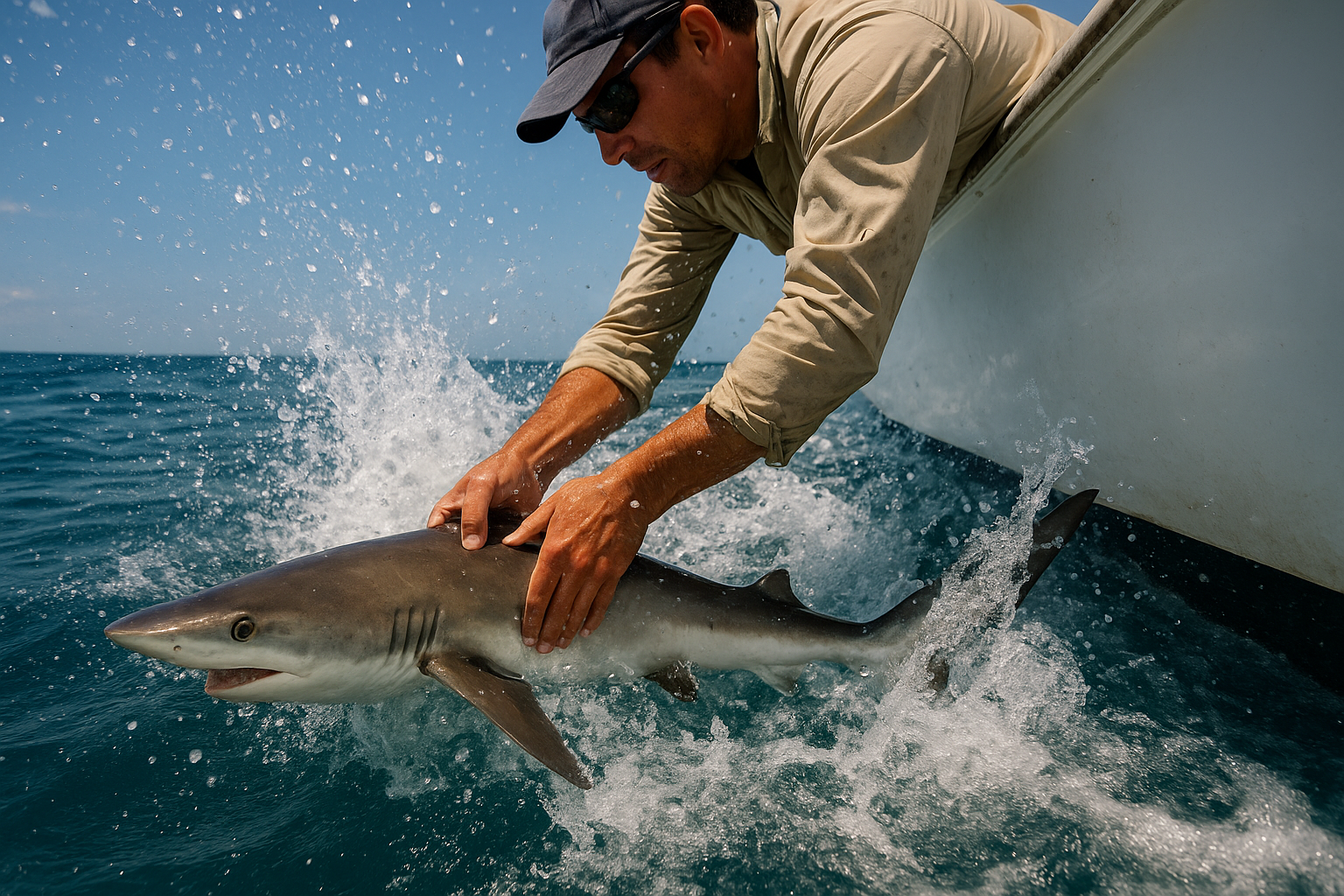
Careful boatside handling helps support healthy shark populations during catch-and-release trips.
How to Book a Private Shark Fishing Charter
Booking a private charter is straightforward, but a few simple steps help ensure the trip matches your group’s expectations. The following process reflects how most guests move from initial interest to a confirmed reservation.
- Define your group’s goals and experience level. Decide whether your group wants a relaxed nearshore trip or a more adventurous offshore outing, and consider how many anglers, including children or beginners, will be aboard.
- Check available shark season dates. Review open dates during peak activity months and compare trip lengths, since nearshore trips run shorter than full offshore excursions that require more travel time.
- Confirm trip details with the captain. Discuss departure location, expected species, boat capacity, and any special requests, such as instruction for beginners, before finalizing the booking.
- Prepare for departure day. Pack sun protection, appropriate footwear, and water, then arrive early so the captain can review safety procedures and rigging before heading out.
Guests who prefer personal guidance can also call or text the charter directly for help matching a trip to their group’s comfort level and schedule.
Choosing Between Nearshore and Offshore Shark Trips
Nearshore shark trips stay close to the beach and inlet jetties, targeting smaller coastal species in relatively calm water. Because these trips involve shorter runs, they tend to work well for families and first-time anglers who want action without a long boat ride.
Offshore trips, on the other hand, travel farther out toward deeper structure and stronger current lines. Consequently, these outings can produce larger sharks, but they also require more time on the water and a higher comfort level with open-water conditions. Guests weighing both options can review the family-friendly shark fishing charters page alongside more advanced trip descriptions to decide which format fits their group.
Matching the Trip to Your Group
Specifically, families with young children often do best on shorter nearshore trips, while experienced anglers chasing bigger fish may prefer a longer offshore run. In either case, captains use current tides, weather, and bait movement to decide where fishing is likely to be most productive that day.
What to Expect on Your Shark Season Trip
Once aboard, the captain will typically explain safety procedures, rod handling, and what to do once a shark is hooked. Because these fish can be powerful, proper technique matters more than raw strength, and instruction is provided throughout the trip.
Meanwhile, guests should expect some downtime between bites, since shark fishing often involves waiting for the right conditions to develop. Bringing a hat, sunscreen, and non-marking shoes helps make that waiting time more comfortable. For more specifics on tackle and technique, the shark fishing in Myrtle Beach, South Carolina page covers additional trip details.
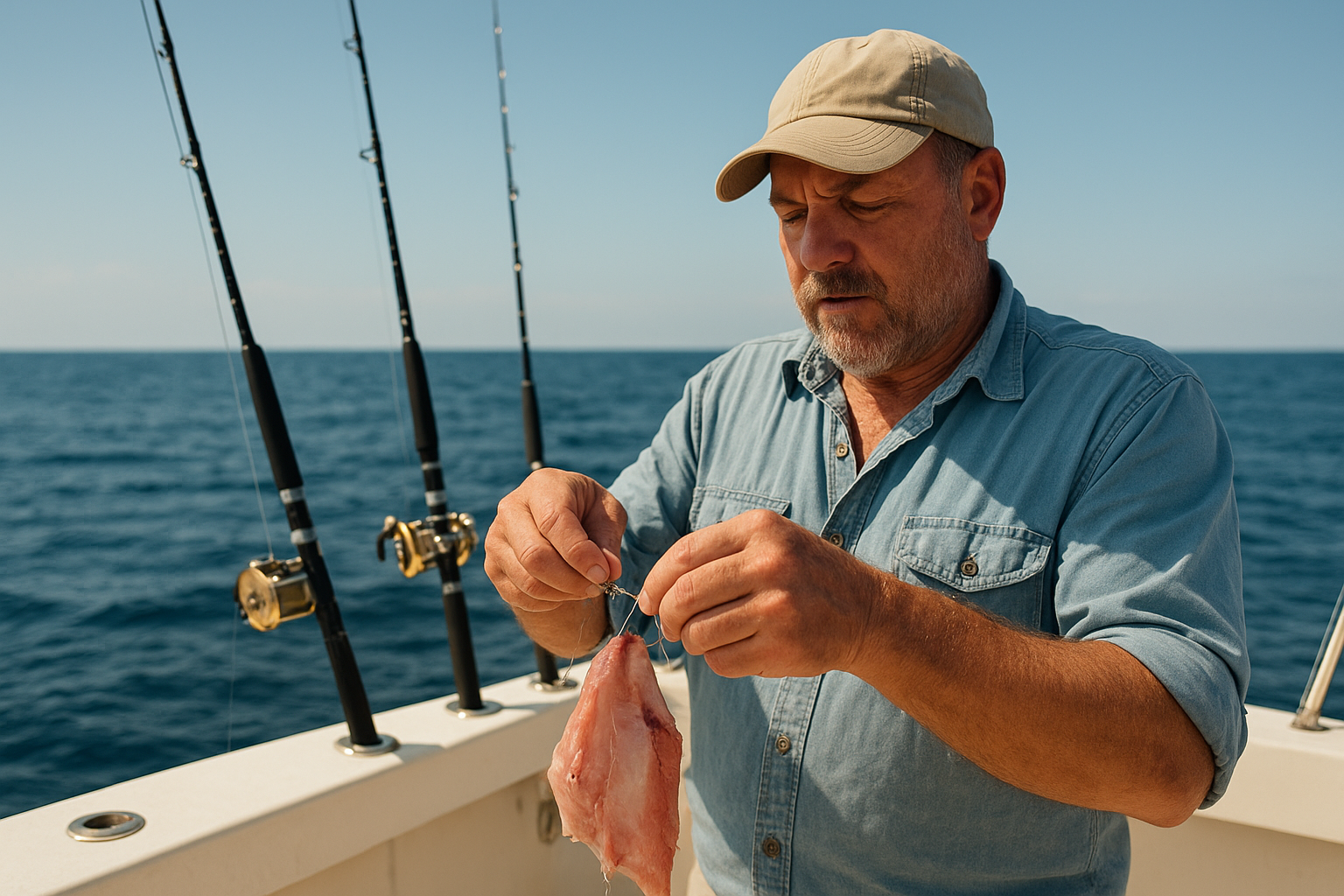
Captains rig tackle and bait specifically for the conditions found each day on the water.
Frequently Asked Questions About Myrtle Beach Shark Season Charter Trips
What are Myrtle Beach shark season charter trips?
Myrtle Beach shark season charter trips are private, guided fishing excursions timed to when migratory shark species move into nearshore and inshore Grand Strand waters. Licensed captains provide the boat, tackle, bait, and instruction so guests can target sharks safely without owning specialized equipment.
When is shark season near Myrtle Beach?
Shark activity typically increases from late spring through early fall as coastal water temperatures warm. However, captains monitor conditions daily, since timing can shift with water temperature and bait movement.
What shark species might I catch on a charter?
Anglers commonly encounter blacktip, spinner, sandbar, and bonnethead sharks in nearshore Carolina waters, depending on the season. Species vary by depth, location, and time of year, so catches are never guaranteed.
How much does a private shark fishing charter cost?
Pricing depends on trip length, boat size, and departure location, since every trip is private rather than a shared seat. Contacting the charter directly or checking the online booking system provides an accurate quote for your group.
How long do shark charter trips typically last?
Most shark fishing trips run between four and eight hours, depending on whether the charter stays nearshore or heads farther offshore. Longer trips generally allow more time to locate active feeding areas.
Is shark fishing suitable for kids and beginners?
Yes, many nearshore shark trips are designed with families and first-time anglers in mind. Captains adjust tackle, technique, and pace based on the group’s experience and comfort level.
What is the difference between nearshore and offshore shark charters?
Nearshore trips stay close to the beach and jetties, targeting smaller coastal species in calmer water. Offshore trips run farther out toward deeper structure, where larger sharks and stronger currents are more common.
What should I bring on a shark fishing charter?
Guests should bring sunscreen, polarized sunglasses, non-marking shoes, and a reusable water bottle. Rods, reels, bait, tackle, and required safety gear are typically provided by the charter.
Do charter guests keep the sharks they catch?
Most shark fishing charters practice catch-and-release to support healthy coastal shark populations. Specific handling practices should be confirmed with the captain before the trip, since regulations vary by species and size.
What common mistakes do first-time shark anglers make?
First-time anglers often use tackle that is too light or fight fish incorrectly, which can prolong the fight and stress the shark. Following the captain’s instructions on rod angle, drag settings, and leader handling helps avoid these mistakes.
How far in advance should I book a shark charter?
Booking two to four weeks ahead is recommended during peak summer months, since private trips have limited daily availability. Shoulder-season dates sometimes offer more flexibility for last-minute planning.
What happens if bad weather cancels my trip?
Captains monitor marine forecasts closely and will reschedule or adjust plans if conditions are unsafe. Guests are typically offered an alternative date or trip type rather than losing the outing entirely.
Are the captains licensed for shark fishing charters?
Yes, charters are operated by U.S. Coast Guard-licensed captains familiar with local shark behavior and regulations. This licensing covers vessel safety, navigation, and passenger handling requirements.
Can large groups book a shark fishing charter together?
Select boats accommodate larger private parties, and multiple boats can be coordinated for bigger groups. Group size and boat capacity should always be confirmed during booking. Details on capacity and group options are available on the private shark fishing charters page.
Planning Your Shark Fishing Trip With Confidence
Ultimately, a successful shark charter comes down to matching the right trip to your group and trusting a captain who understands local conditions. Because water temperature, tides, and bait movement all shift throughout the season, working with an experienced crew makes a meaningful difference in the quality of the outing.
For additional questions before booking, the shark fishing FAQ page covers many of the practical details guests ask about most often. Similarly, the reference materials from South Carolina’s Department of Natural Resources offer helpful context on regional shark populations and conservation practices.
In summary, Myrtle Beach shark season charter trips offer a private, adaptable way to experience one of the region’s most exciting fisheries, whether you are chasing a first shark with the kids or planning a more serious offshore run. With licensed captains, included gear, and trip plans built around current conditions, both beginners and experienced anglers can find a suitable option. Booking early, communicating your group’s goals, and staying flexible with dates all help ensure a memorable day on the water.